
Winter Is Gone But the Damage Stays
You step outside one spring morning. The grass looks rough. Bare patches everywhere Some spots are brown. Others just… empty.
This is super common Winter foot traffic, pet urine and cold stress all leave marks. The good news? Spring is the best time to fix it. The soil is warming up. Rain is coming. Grass wants to grow.
At Ex Landscaper, we hear this from homeowners every single spring. And the fix is simpler than most people think.

Why Does Grass Die in Patches Anyway?
Bare spots don’t just appear randomly. There is always a reason.
Heavy foot traffic packs the soil too tight. Roots can’t breathe. Grass slowly dies. Pet urine burns the turf and leaves yellow or dead circles. Grubs eat roots from underground. You won’t even see them working.
Shade is another big one. Grass under trees gets weak. It thins out over time. Fungal diseases also spread fast in wet springs. Wet soil plus no airflow equals trouble.
Knowing the cause helps you fix the right problem.
The Best Time to Start Repairs Is Based on Your Grass Type
Timing matters a lot here. Planting at the wrong time wastes seed and effort.
Cool-season grasses like Kentucky bluegrass and fescue do best when you start between late March and early May. Soil needs to be at least 55°F. These grasses are common in the US North, UK and most of Europe.
Warm-season types like Bermuda and Zoysia need warmer conditions. Wait until April through June. Soil should hit 65°F or higher. This applies more to the US South and Australia.
Not sure which type you have? A quick soil thermometer check tells you everything.
Cool-season grasses grow best from March through May when the soil hits 55°F or above. Warm-season grasses need April through June with soil at 65°F or above. If you are in a transition zone, aim for April through May and watch for lilac blooms as a natural soil temp signal.
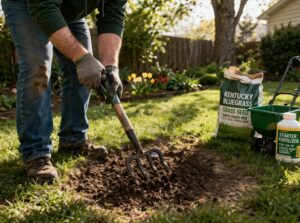
How to Fix Bare Spots Easy 7 Steps
This is the part that actually gets results. Follow these steps and the patches fill in fast.
Step1. Mow low first.
Cut the grass down to about 1.5 to 2 inches. Then rake out dead material. You need clean soil contact for the seed to work.
Step2. Loosen the soil.
Use a garden fork or hand rake. Go about 2 to 4 inches deep. Compacted soil blocks root growth. This step fixes that.
Step3. Choose the right seed.
Match the new seed to your existing grass. Mixing random seed types looks patchy long term. Use about 5 to 10 pounds per 1,000 square feet.
Step4. Topdress the area.
Spread a thin layer of compost on top. Just 1/8 to 1/4 inch is enough. This locks in moisture and helps germination.
Step5. Apply starter fertilizer.
Look for one high in phosphorus. This supports early root development. Don’t skip this step.
Step6. Water lightly every day.
Keep the soil moist but not soaked. Do this for 2 to 3 weeks. New seedlings dry out fast. They need consistent moisture.
Step7. Stay off the new grass.
Avoid traffic on the repaired area for at least 4 weeks. Let roots settle before any pressure goes on them.
Read more: Stop Crabgrass Before It Sprouts (95% Success Rate)
Seed vs Sod vs Patch Mix Which One Should You Use?
Not every bare spot needs the same fix. Here’s a simple breakdown.
Seeding takes 2 to 4 weeks and costs the least. It works best for large bare areas. Sod or plugs give you almost instant results but cost more. These are great for small visible spots. Patch mix products sit in the middle. They take 1 to 2 weeks and are perfect for quick DIY repairs.
Seeding takes patience but costs the least. Sod looks great right away but costs more. Patch mix products are a solid middle ground for busy homeowners.
What Tools Do You Actually Need?
You don’t need fancy equipment for this. A few basics cover most repairs.
A rake handles debris removal and soil loosening. A hand spreader gets seed down evenly. Starter fertilizer kicks off growth. A basic soil thermometer tells you if the timing is right.
Budget around $20 to $50 for a 1,000 square foot area. That’ s it.
Read more: 7 Proven Ways to Beat Winter Lawn Damage from Salt, Ice & Traffic
These Mistakes Kill New Grass Before It Even Starts
Most failed repairs come down to the same few errors.
Overwatering is the biggest one. Soggy soil causes rot. The seed never sprouts. Water lightly and often instead of heavily all at once.
Using the wrong seed type is another trap. Warm-season seed planted in cool soil sits dormant and dies. Always match seed to your region and existing turf.
Skipping aeration is a common shortcut that backfires. Hard soil blocks root growth no matter how good the seed is.
Fertilizing too soon burns young seedlings. Wait until the grass is at least an inch tall before adding anything strong.
One bonus tip: test your soil pH. The sweet spot is between 6.0 and 7.0. Outside that range, grass struggles no matter what you do.
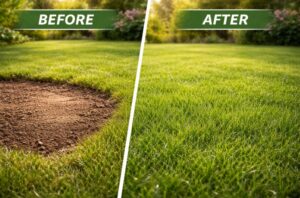
After the Repair Keep the Momentum Going
New grass is fragile in the first few weeks. Here is how to protect it.
Water deeply once a week once grass is established. Mow at about 3 inches to reduce stress. Keep weeds from taking over while turf fills in. A post-emergent weed spray helps after the grass has fully rooted.
Consider overseeding again in fall. This thickens the lawn before winter hits and gives you a stronger start next spring.
FAQs
When is the right time to fix bare spots?
Watch your soil temperature. Cool-season grass needs 55°F. Warm-season grass needs 65°F. That’s the real trigger.
Can I repair my lawn during a rainy spring?
Yes. Wet springs actually speed up germination. Just make sure to aerate first so water drains instead of pooling.
How long until the bare spots are fully green?
Expect 4 to 6 weeks for full coverage. Some spots fill in faster depending on seed type and watering consistency.
What if the same spot keeps dying?
The cause has not been fixed yet. Check for grubs underground. Look at drainage. Shade might be the issue. Fix the root cause first.
Is overseeding the same as repairing bare spots?
Overseeding covers the whole lawn to thicken it. Repairing targets specific dead areas. Both use similar techniques but serve different goals.
Read more: Soil Testing and Solutions Complete Guide
At The END
Spring gives you a real window to turn things around. Bare spots are fixable. It just takes the right timing and a few simple steps.
You don’t need a professional crew. You don’t need expensive gear. A few tools and some patience go a long way.
Start this weekend. Your lawn will look completely different by summer. Okay thanks for reading and if you have any question just comment bellow. Bye bye