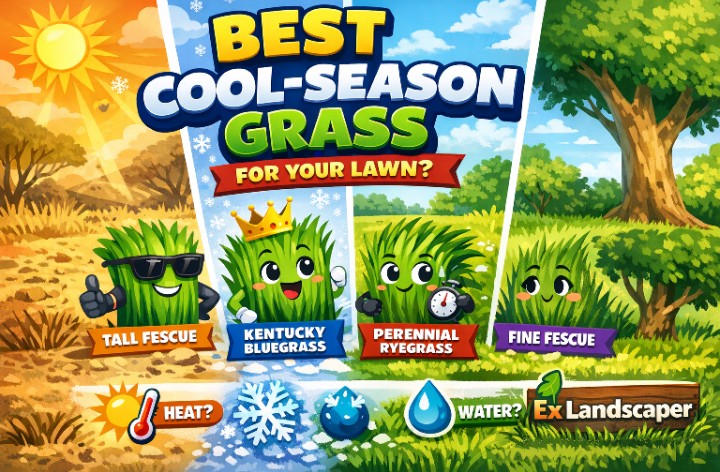
Picking grass should not give you a headache. But man, it actually matters. Last thing you need is spending every weekend fixing your lawn. Let me walk through these five cool-season grasses. No complicated stuff, just what works.
THE FIVE COOL-SEASON GRASSES YOU NEED TO KNOW
Grasses are like people honestly. Each one acts different. Some basically raise themselves. Others? Constant babysitting.
Tall Fescue: The Tough Guy
My buddy across the street planted tall fescue three years back. Waters it maybe once a week. Last July when everyone’s yard looked dead? His was still green.
Roots dig down 2 to 4 feet deep. That’s the secret. When surface water dries up, it finds moisture way down there.
Blades come out dark green, medium width. Looks pretty decent. But it grows in bunches, not a carpet. So bare spots? They just stay bare until you throw down more seed.
Still beats dealing with fussy grass. Places where summer roasts you but winter stays mild? This stuff just keeps going. Transition zones eat it up.
Kentucky Bluegrass: The Premium Choice
Ever drive past those perfect golf course lawns? Probably Kentucky bluegrass. Blades are narrow with these weird little boat tips.
Spreads using underground stems. Rhizomes or whatever. So when the neighborhood kids destroy your yard? It actually grows back on its own. Pretty neat trick.
But wow, this grass is demanding. Needs water constantly. Fertilizer every six weeks. You will own a lawnmower basically.
Freezing cold though? Does not even notice. Up north where winter means business, this grass just shrugs. Needs bright sun all day though. Plant it in shade and watch it die slowly.
Perennial Ryegrass: The Quick Starter
In a hurry? Perennial ryegrass shows up in 5 to 7 days. Everything else makes you wait forever.
Color’s ridiculous too. That dark green everyone tries to get. Landscape guys throw it in with slower grasses on purpose. Keeps soil in place while the other stuff wakes up. They call it nurse grass.
Great for patching dead spots fast. Starting fresh. But winter cold beats it down. Plus you’re mowing and watering constantly.
Best in areas where weather doesn’t go crazy. Harsh winters kill it.
Fine Fescue: The Shade Champion
Big trees blocking all your sun? Fine fescue actually wants that. Give it 2 to 4 hours of sun and it’s happy. Nothing else pulls that off.
Blades are really thin. Lighter green color. Grows super slow so mowing happens maybe twice a month. Fertilizer once or twice a year. Bad soil? Doesn’t even care.
Downside is wear and tear. Kids playing tag constantly? It gets beat up. But those quiet shady spots nobody uses? This grass owns them completely.
Perfect if you want basically zero work.
Creeping Bentgrass: The Golf Course Grass
Seen it on putting greens. Super fine texture, crazy dense.
Forget it for home lawns though. Needs professional attention every single day. Seriously, daily maintenance. Unless you’re running an actual golf course, don’t bother.
COMPARING THEM SIDE BY SIDE
Let’s stack them up real quick.
Hot weather? Tall fescue destroys the competition. Kentucky bluegrass and perennial ryegrass survive. Fine fescue starts struggling.
Freezing temps? Kentucky bluegrass laughs at winter. Tall fescue and fine fescue do fine. Perennial ryegrass gets wrecked.
Dry spells? Tall fescue wins because roots go deep. Fine fescue hangs in there. Kentucky bluegrass dies without constant watering.
Shade spots? Fine fescue dominates completely. Everything else needs 6-plus hours of direct sun.
Work required? Fine fescue and tall fescue are chill. Other two need attention every week.
Fixes itself? Only Kentucky bluegrass spreads and fills holes. Rest just sit there.
How fast? Perennial ryegrass pops in 5 to 7 days. Tall fescue takes 10 to 14. Kentucky bluegrass drags along at 14 to 21.
WHICH GRASS SHOULD YOU CHOOSE?
Weather matters most. Then how much free time you got.
Go tall fescue if you are stuck in that middle zone. Summers cook you but winters still freeze. Want easy lawn life? This is your answer. Drought problems? Deep roots handle it. Some shade around? Works fine.
Pick Kentucky bluegrass way up north. Brutal winters. Want that perfect thick lawn? This delivers every time. But you’re committing to weekend maintenance forever. And zero shade tolerance.
Grab perennial ryegrass when patience isn’t your thing. Filling bare patches quick? Perfect choice. Mixes great with other grasses. Just accept the high maintenance. And only works where weather stays reasonable.
Choose fine fescue when trees block everything. Tons of shade? This grass loves it. Terrible soil? Does not matter at all. Almost zero maintenance required. Just don’t let heavy traffic wear it down.
Best bet overall? Mix them up. 80% tall fescue, 10% Kentucky bluegrass, 10% perennial ryegrass. Covers everything. Not too much work. Quick start plus some self-repair magic happening.
WHAT WORKS IN YOUR REGION
Northeast people usually plant Kentucky bluegrass with perennial ryegrass mixed in. Cool weather and decent rain makes that work.
Midwest mostly runs Kentucky bluegrass straight. Western parts where it gets dry? Tall fescue makes way more sense.
Pacific Northwest folks blend perennial ryegrass and fine fescue together. Cool, wet, shady. Perfect situation for that mix.
Transition zone? Tall fescue every time. Handles both extremes. Nothing else keeps up year-round.
WATER AND CARE REQUIREMENTS
Water needs jump all over the place.
Tall fescue wants about 1 inch per week. Fine fescue even less at 0.75 inch. Kentucky bluegrass? 1.5 inches minimum. Always begging for water. Perennial ryegrass sits around 1.25 inches.
Fertilizer schedule changes too.
Fine fescue maybe 1 or 2 times yearly. Tall fescue happy with 2 to 3. Kentucky bluegrass and perennial ryegrass demand 4 to 5. That’s a lot.
Mowing depends on the type.
Fine fescue every 10 to 14 days. Slowest grower. Others need weekly cuts guaranteed. Perennial ryegrass grows like crazy. Peak times might mean mowing twice weekly.
THE GOOD AND BAD OF EACH
Tall fescue beats everything in heat and drought. Those deep roots do heavy lifting. Maintenance stays manageable. Problem is it clumps. Bare patches need reseeding always.
Kentucky bluegrass owns cold weather completely. Repairs damage on its own. Creates those magazine-perfect lawns. But guzzles water nonstop. Demands constant attention. Plant it in shade and cry later.
Perennial ryegrass sprouts fastest by far. Gorgeous dark color. Perfect as nurse grass. But winter cold destroys it. Plus maintenance never stops.
Fine fescue dominates shade better than anything else alive. Barely needs maintenance ever. Low water, low fertilizer. But heavy foot traffic kills it. Hot weather makes it weak too.
FINAL RECOMMENDATION
Most regular people should use a tall fescue blend. Mix it 80% tall fescue, 10% Kentucky bluegrass, 10% perennial ryegrass.
Why though? Handles heat, drought and shade reasonably. Maintenance stays realistic for normal folks. Ryegrass gives quick coverage early. Bluegrass adds self-repair over time. Works in most places across the country.
Special situations need adjustments.
Heavy shade everywhere? Pure fine fescue only. Way up north with killer winters? Straight Kentucky bluegrass or mostly that. Serious drought zone? All tall fescue. Need instant results? Load up the ryegrass percentage.
MAKING YOUR DECISION
Ex Landscaper has seen probably hundreds of lawns change completely. Right grass selection makes or breaks everything. Get honest about your actual weather first. Summer heat really that bad? Winter cold enough to worry about?
Check sunlight and soil honestly. Count real hours of direct sun hitting your yard. Not guessing. Actually time it. What’s soil quality looking like?
Think hard about available time. Can you really mow every Saturday morning? Water twice weekly minimum? Or need something way easier?
Match all that stuff to what we covered up there. Mixes usually work best for average situations. They handle different conditions way better.
Your lawn does not need magazine perfection. Just needs to work for your actual life. Pick grass matching your real weather and available schedule. That’s literally the whole thing.
Nothing’s completely maintenance-free ever. But some choices are drastically easier than others. Choose smart now and actually enjoy your yard later instead of hating it. Thank you! Bye bye……