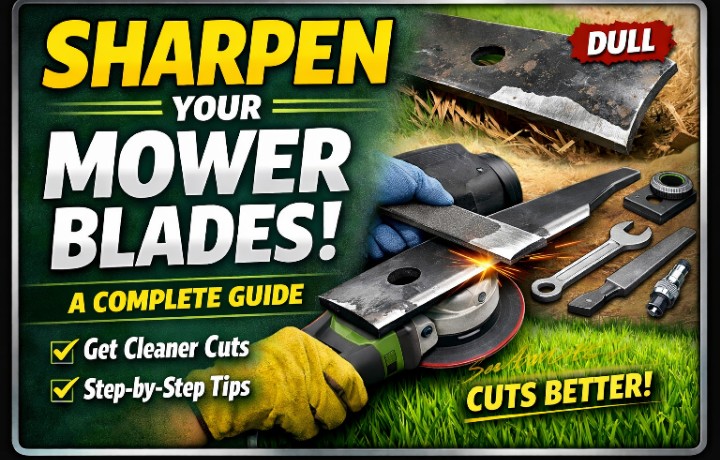
Hello, I hope All are well, However Your lawn deserves better than torn grass tips. Dull cutting edges rip through grass instead of slicing cleanly. This creates brown, ragged tips that make your yard look unhealthy.
A well-maintained edge cuts like scissors. Clean slices keep your turf healthy and vibrant. You’ll also save time and fuel because properly honed equipment works more efficiently.
This guide shows you everything. You will learn when to restore edges, what tools you need, and how to do it safely. Let’s get your mower cutting like new again.
Why Regular Blade Maintenance Is Important for Your Lawn
Blunt cutting surfaces tear grass fibers at the cellular level. This stresses your plants and invites fungal diseases. Think about cutting paper with worn scissors the principle is identical.
Properly maintained equipment creates multiple benefits. Your turf stays greener because plants heal faster from clean cuts. Lawn care becomes easier on your engine, reducing vibration and extending machine lifespan.
Most homeowners should restore their edges every 20-25 operating hours. For weekly mowing schedules, that translates to twice per growing season. Hit a rock or obstruction? Address the damage immediately.
Dense grass types like Bermuda or Zoysia require more frequent attention. Rocky conditions often accelerate blade wear. Homeowners in rocky regions often report faster dulling.
How to Tell When Your Cutting Edges Need Attention
Walk your lawn after mowing. Look for uneven cut heights across the surface. Grass tips should look clean, not frayed.
Brown or white edges signal torn vegetation. Your equipment isn’t cutting anymore it’s beating the grass down. This weakens your entire lawn.
Check the cutting component itself for damage. Dents and nicks mean it’s time. Excessive vibration while operating also indicates problems.
Inspect after tough sessions. Wet grass dulls edges quickly. Rocky terrain speeds up wear too.
Essential Equipment for DIY Lawn Mower Maintenance
Assemble your lawn mower maintenance kit before starting. You’ll need safety gloves for protection. A socket wrench removes the cutting component from your deck.
A bench vise holds everything secure during work. Choose between a bastard file or angle grinder for edge restoration. Both methods produce excellent results with practice.
Don’t forget a wire brush for cleaning. A balancer ensures proper weight distribution. These basics handle most residential equipment.
Optional items make work easier. A drill with sharpener attachment saves time. Specialized kits offer convenience. But simple tools work just fine.
Safety Guidelines Before Working on Your Mower
Safety comes first, always. Disconnect the spark plug on gas-powered equipment. This prevents accidental starts that could injure you.
Unplug electric models completely. Wear thick gloves to protect your hands. Sharp edges cut deep and fast.
Secure the component in a vise properly. Work on a stable surface with good lighting. Keep children and pets away from your workspace.
Don’t over-hone your cutting surface. Too much grinding weakens the metal. Thin edges chip easily and create imbalance.
Complete Blade Restoration Process: 7 Simple Steps
Remove your cutting component carefully. Tilt the equipment on its side safely. Disconnect the spark plug first for protection.
Use a wrench to loosen the center bolt. Note which direction it turns. Some models have reverse threads that confuse people.
Clean everything with your wire brush. Remove all debris, grass clumps, and rust. This helps you spot damage clearly.
Sharpen at original factory bevel (often ~30°). File or grind the cutting edge only. Use even strokes across the entire surface.
Stop periodically to cool the metal. Overheating weakens the steel structure. Feel the temperature with your gloved hand.
Balance before reinstalling. Place it on a balancer tool. Grind the heavier side lightly if needed.
Reinstall according to torque specifications. Tighten the bolt firmly but correctly. Reconnect the spark plug last.
Errors That Reduce Cutting Performance and Blade Life
Over-honing creates thin edges. These chip easily and dull faster. Your cutting surface should feel sharp, not razor-thin.
Skipping the balance step causes problems. Unbalanced components vibrate excessively during operation. This damages bearings and spindles.
Many people ignore cleaning completely. Dirt and rust hide cracks or bends. Always clean before restoration work.
Changing the wrong angle affects performance. Stick to the factory bevel angle. Consistency matters for proper cutting.
Seasonal Care Schedule for Optimal Mower Performance
Restore edges before each mowing season starts. Do it again mid-summer for best results. End the season with fresh edges.
Adjust frequency for your conditions; typically every 20-25 hours. More rocks mean more frequent attention.
Replace components showing serious damage. Cracks or warping require new parts. After several sharpenings (typically 5-10 times), consider replacement.
Store properly during off-season. Clean thoroughly and apply light oil. This prevents rust and corrosion.
Keep a maintenance log. Write down restoration dates and observations. Patterns emerge that help you optimize timing.
FAQ
How often should I sharpen mower blades?
Every 20-25 hours of mowing time works well. That translates to 1-3 times per growing season. Heavy use requires more frequent attention.
Should I use a file or grinder?
Files give you better control as a beginner. Grinders work faster but generate heat. Both methods produce excellent results with practice.
When should I replace instead of sharpen?
Severe damage means replacement time. Thin edges from repeated work need new components. Cracks or bends are safety hazards.
Can I sharpen without removing the blade?
Not recommended for safety reasons. The spark plug must be disconnected. Removing the cutting component ensures proper work.
What causes blades to dull quickly?
Sandy or rocky soil accelerates dulling. Hitting hard objects damages edges. Wet grass also wears surfaces faster.
Do reel mowers need sharpening differently?
Yes, reel equipment requires specialized techniques. Most homeowners use professional services. Rotary models are easier to DIY.
The END
Well-maintained cutting edges transform your lawn care routine. Clean cuts promote healthier grass growth. Your equipment runs more efficiently too.
Start by checking your mower today. Look for those telltale signs of dullness. Gather your tools and follow our step-by-step guide.
Regular maintenance saves money long-term. You’ll extend your machine’s lifespan significantly. Your lawn will thank you with vibrant green growth.
Make edge restoration part of your seasonal routine. It takes less than an hour. The results speak for themselves every time you mow. Thanks for reading and if you have any question, Just comment bellow. Bye Bye