
Is your lawn turning green but you are not sure when to grab the mower? That feeling is super common. Every spring millions of homeowners stare at their yard and wonder the same thing.
Mow when your grass hits 3–4 inches and the soil feels firm and dry. That’s the short answer. But there is more you should know before you fire up that mower.
This guide covers when to mow how to prep, the right height to cut and what to do after. Lets get into it.
Your Lawn Needs the First Cut to Start Strong
Winter is rough on grass. The cold stresses the roots, the soil compacts and the blades can mat together. So the first cut of the year isn’t just routine it actually sets the tone for the whole season.
Get it right and your lawn bounces back fast. Get it wrong and you are dealing with patchy growth, weeds and weak turf all summer. That’s why this first step matters more than most people think.
Don’t Follow the Calendar Watch the Lawn Instead.
Forget the idea that March 1st or Easter Sunday is mow day. The calendar does not know what’s happening in your yard. Your lawn does.
Look for three clear signs. First the grass should be actively turning green again. Second it should be around 3 to 4 inches tall. Third and this one’s easy to miss the soil should feel firm underfoot. Press your heel down. If it sinks or squishes, wait.

Mowing wet or soft ground causes compaction. That squeezes out the air pockets your roots need to breathe. It is a small mistake that causes big problems later.
Read More: Pre-Emergent Herbicides: Timing is Everything Homeowner Guide
Timing Depends on Where You Live
Not every yard wakes up at the same time. Your location and grass type change everything.
If you are in the Northern US or Canada, you are likely growing cool-season grass like fescue, bluegrass or ryegrass. Your first mow window usually falls between late March and mid-April. Target height is 3 to 3.5 inches.
Down in the Southern US, warm-season grasses like bermuda, zoysia and St. Augustine start earlier. Early to mid-March is typical, and you are aiming for around 2.5 to 3 inches on that first cut.
Live somewhere in the Transition Zone? You may have a mix of grass types. Watch your soil temp closely and aim for around 3 inches. There is no fixed date the lawn tells you when it’s time.
Cool-season grasses need soil temps around 45–55°F before they really start growing. Warm-season grasses don’t wake up until soil hits 60–65°F. A cheap soil thermometer from a garden store makes this easy to check. When does lawn mowing season start
Check the Yard Before You Touch the Mower
Walk your lawn first. Seriously just take five minutes and look around.
Check for soggy spots. Look for bare patches left by winter. Watch for snow mold, which shows up as grayish circles of matted, dead-looking grass. Note where the damage is so you can overseed those areas later.
If the ground feels mushy anywhere, skip those spots or come back in a few days. Mowing wet turf tears roots and leaves ruts. Not worth it.
Read more: Winter Lawn Care Tips Keep Your Grass Healthy
Clean Up Before You Cut
Pull out any sticks, rocks or leftover leaves. These things can shoot out from under the mower deck and cause real damage to people, windows and the mower itself.
If the grass looks matted and flat in places, give it a light rake. This lifts the blades so the mower can reach them. It also helps break up any thatch that’s been sitting there since fall.
This step takes maybe 15 minutes. It makes a big difference in how the first cut turns out.
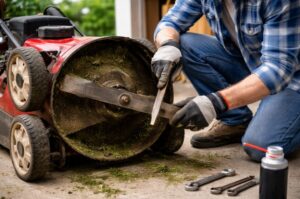
Get Your Mower Ready Before Spring Mowing Starts
A dull blade is one of the most common spring lawn mistakes. It does not cut grass it tears it. Torn tips turn brown and become entry points for disease.
Sharpen your blades every season. While you are at it, check the oil and air filter. Make sure the fuel is fresh. Old gasoline from last fall can gunk up the carburetor. For electric or battery mowers, charge everything up and check the cable for any damage.
At Ex Landscaper we always say a well-serviced mower does 50% of the work before you even start cutting.
The Right Cutting Height for Your First Spring Mow
Here is the rule you need to know never cut more than one-third of the grass height at once.
So if your grass is 4 inches tall, do not cut below 2.5 to 3 inches on the first pass. Set your mower to its highest or near-highest setting. This protects the roots, keeps moisture in the soil and prevents weeds from getting the sunlight they need to sprout.
Cool-season grasses do best at 3 to 3.5 inches after the first cut. Warm-season grasses are a bit shorter at around 2.5 to 3 inches. Dropping too low too fast called scalping stresses the plant badly. It takes weeks to recover. Spring lawn mowing tips from RHS
How to Actually Mow on the First Pass
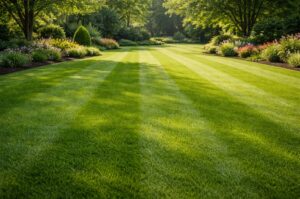
Pick a dry day with mild temps, ideally between 50 and 70°F. Mid-morning is ideal. The dew has dried off but the heat has not peaked yet.
Go slow. Rushing the mower leaves uneven rows and missed patches. Overlap each pass slightly so nothing gets skipped. Mow in straight lines first then alternate direction on your next mowing session this stops the grass from leaning one way permanently.
Do the edges and borders last. Trimming after you mow gives a much cleaner finish than going the other way around.
What to Do With the Grass Clippings
After a long winter your grass might be long and patchy. If it is bag the clippings this first time. Heavy dead material left on the lawn can smother new growth.
But if the grass looks fairly healthy and you only took off a little, leave the clippings. They break down fast and put nitrogen back into the soil. That’s free fertilizer.
If the grass is very long and you can’t safely take one-third off in a single session, split it into two cuts. Mow at a high setting first. Wait two to three days. Then bring it down to your target height.
Take Care of the Lawn Right After Cutting
Give the grass a day to settle. If the soil is dry, water lightly. If it’s already damp leave it alone.
Check for thin or bare spots after the cut they’re easier to spot once the grass is trimmed. Early spring is a good time to overseed cool-season lawns. Warm-season grasses do better with overseeding in late spring.
If you want to fertilize, wait a week or two after the first mow. A high-nitrogen spring fertilizer works well but don’t push it if the lawn looks stressed. Too much fertilizer too soon causes more harm than good. When to mow your lawn in spring
How Often Should You Mow After the First Cut?
In early spring, every 10 to 14 days is usually enough. The grass is not growing at full speed yet.
As April rolls in and temps climb, growth speeds up. You will shift to weekly mowing naturally. Just keep using the one-third rule. Let the grass height tell you when it’s time not the day of the week.
Read more: Cool-Season Grass Comparison Make your decision fast
Mistakes People Make on Their First Spring Mow
These come up again and again, so it’s worth knowing them:
Mowing too early The ground is still soft and the grass is not ready. You will damage more than you help.
Using a dull blade Torn grass invites disease. Sharpen the blade once a season at minimum.
Cutting too short That “summer look” is not right for spring. Keep it longer to protect the roots.
Skipping the yard check Rocks, toys and thick debris can cause real damage in seconds.
Mowing on wet ground Compaction, ruts and root damage all come from this one mistake.
Going too fast You will miss spots and the cut will be uneven. Slow down.
Your First Mow of Spring Checklist
Before you mow:
– Grass is 3 to 4 inches tall
– Soil feels firm and dry underfoot
– Temps are between 50 and 70°F
– Yard is cleared of sticks, rocks and debris
– Mower blade is sharp and fuel is fresh
While you mow:
– Mower is on its highest setting
– You are following the one-third rule
– Pace is slow and steady
– Passes overlap slightly
After you mow:
– Inspect for bare spots or damage
– Lightly water if the soil is dry
– Plan for overseed or light fertilizer if needed
– Schedule the next mow in 10 to 14 days
FAQs
When should I mow my lawn for the first time in spring?
Mow when grass reaches 3 to 4 inches and the soil is dry and firm. Don’t go by the date watch the lawn.
What if my lawn is still too wet?
Wait. Mowing wet turf causes compaction and can rip roots out. A few extra days make a big difference.
What height should I cut grass in spring?
Set your mower to the highest or near-highest setting. For cool-season grasses, aim for 3 to 3.5 inches. For warm-season, around 2.5 to 3 inches.
Should I bag or mulch clippings on the first mow?
Bag if the grass is long or has a lot of dead material. Mulch if it’s healthy and you only trimmed a little.
How do I know if my soil is ready?
Step on it. If it bounces back and feels solid, you are good. If your heel sinks in wait a few more days.
Can I fertilize right after the first mow?
Give it a week or two. Early spring fertilizer is fine but dont rush it if the grass looks stressed.
How often should I mow in early spring?
Every 10 to 14 days to start. Move to weekly as growth picks up through April and May.
Ok bro thanks for reading and if you have any questions you just comment bellow. Bye bye