
Ever stepped out to find your lawn overrun by weeds? Man, it gets under your skin fast. Thing is, most of those invaders start from seeds hunkered down in the soil you can stop ’em cold before they even poke through.
That’s pre-emergent herbicides for you. Like an invisible shield right in the dirt, they keep weed seeds from growing roots. No roots? No weeds taking over your yard.
But now the kicker: get the timing wrong, and you are just tossing cash on the grass. Apply too soon, that barrier fades before the seeds wake up. Miss the sweet spot, and weeds are already rooting in deep. Waste of time and product.
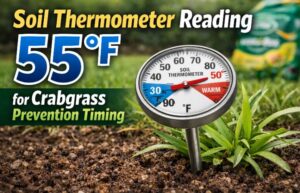
Forget calendars they lie every year. Soil warmth is your real boss. Crabgrass stirs when ground temps hit 50-55°F. Track that, and you’re golden across USDA zones 5-9.
This guide nails down exact temps for Kentucky bluegrass, tall fescue, Bermudagrass. Plus, pitfalls that trip up even careful homeowners. Ready to lock in a weed-free lawn?
What Pre-Emergents Actually Do
Think, a chemical layer right in your topsoil that zaps weed seeds mid-germination. No root growth, no sprouting plants. Totally different from post-emergents, which hunt down weeds you already see waving hello.
They nail annual grasses crabgrass, foxtail and broadleaves like spurge or chickweed. Your established turf? Safe as houses if you follow labels.
Prodiamine’s the star it gums up cell division in those tiny seedling roots. Barrier hangs tough for months up top. Like slathering sunscreen before the burn hits.
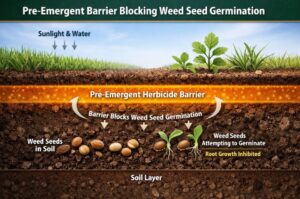
Up close, those molecules stick to soil particles, forming a 1-2 inch danger zone for seeds. Water wakes it up 0.5 inches light irrigation settles everything perfectly. Too much rain? Washes it deeper than needed.
Hot weather chews through it quicker; cool springs let it linger. Timing your app around local forecasts makes all the difference.
Why Timing’s Make-or-Break
Screw up the timing, and pre-emergents flop hard. Not some random spring Tuesday it’s all about that soil warmth signal.
Too early? Barrier crumbles before weeds even think about germinating. Money down the drain, seeds laughing as they sprout later.
Hang back too long? Those suckers already dug roots past the zone. Good luck stopping ’em then effectiveness nosedives.
Aim for 50-55°F at 2-4 inches deep, holding steady. Thermometer or app don’t trust your neighbor’s schedule. Microclimates swing 5-10°F in the same zip code.
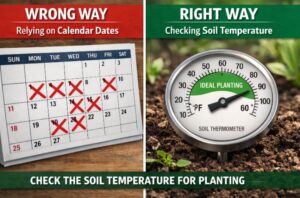
Calendars fool you. Mild February? Go early. Chilly April? Delay. Or geek out on 200-300 growing degree days for pro-level precision.
Best Timing by Grass Type and Zone
Grass dictates your move cool-season vs. warm-season play by different rules.
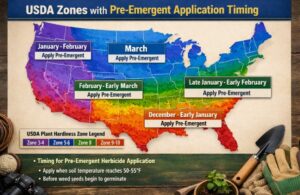
Cool-Season Grasses (Tall Fescue, Kentucky Bluegrass, Ryegrass): Northern and Midwest staples. Spring app at steady 50-55°F March-April in zone 7, nailing crabgrass and Poa annua before liftoff. Fall? Late August-early September, but skip if overseeding. Those seeds get blocked too save it for spring.
Warm-Season Grasses (Bermuda, Zoysia, St. Augustine): Southern heat-lovers like Texas or Florida. Spring kicks off at 55°F February-early March for crabgrass, goosegrass, henbit. Fall when soil drops to 70°F, September-October. Locks out winter annual bluegrass.
Quick Regional Guide (list format):
– Cool-Season (Fescue, Bluegrass): Spring Soil Temp 50-55°F, Spring Window March-April, Fall Window Late Aug-Early Sep, Target GDD 200-300, Top Weeds Crabgrass + Poa annua.
– Warm-Season (Bermuda, Zoysia): Spring Soil Temp 55°F, Spring Window Feb-Early March, Fall Window Sep-Oct (70°F), Target GDD 150-250, Top Weeds Crabgrass + goosegrass.
Tips: Yard Mastery or GreenCast apps free, local, spot-on. No more guessing games.
Top 2026 Products for Home Lawns
Not created equal pick based on your weed woes and yard size. Ratings from real-world tests.
Prodiamine 65WDG Best All-Around: 5/5 stars. Pros swear by it Quali-Pro 65 WDG or Dimension 2EW smash most weeds. 1 lb blankets 43,500 sq ft at low rates. Spray it on; lasts 3-4 months.
Scotts Halts Newbie Pick: 4.5/5. Crabgrass specialist, granular ease. 5,000 sq ft bags, often with fertilizer. 2.87 lbs/1,000 sq ft for full season guard.
Corn Gluten Meal Green Choice: 3.5/5. Espoma brands shine for pet-safe yards. 20 lbs/1,000 sq ft—60% year one, 90% with repeats. Heavy app, lighter punch upfront.
Product Breakdown (list format):
– Prodiamine 65WDG: Active Ingredient Prodiamine 65%, Coverage per lb 43,500 sq ft, Duration 3-4 months, Rating 5/5, Ideal For Big yards + pros.
– Scotts Halts: Active Ingredient Pendimethalin, Coverage per lb 1,740 sq ft, Duration 3 months, Rating 4.5/5, Ideal For Crabgrass newbies.
– Dimension 2EW: Active Ingredient Dithiopyr, Coverage per lb 21,780 sq ft, Duration 3-4 months, Rating 4.5/5, Ideal For Early weeds too.
– Corn Gluten: Active Ingredient Natural proteins, Coverage per lb 50 sq ft, Duration 2-3 months, Rating 3.5/5, Ideal For Organic families.
Crabgrass hell? Pendimethalin. Mixed mess? Prodiamine. Label-check for your weeds broad-spectrum wins.
Application Tools You Can’t Skip
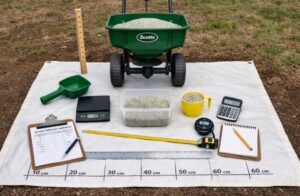
Even coverage or bust. Here’s the kit:
– Soil Thermometer ($10-15): 2-4 inch reads. Amazon or garden shops.
– Broadcast Spreader ($30-150): Granules even. Home Depot must-have.
– Pump Sprayer ($25-80): Liquids smooth. Hardware aisle.
– Measuring Cup ($5): No eyeballing rates.
– Hose Timer ($20-40): 0.5 inch water perfect.
Calibrate that spreader 100 ft test run, weigh output. Label match or fail.
Step-by-Step: Nailing the Application
Follow this, thank me later. Precision pays off.
1. Lawn Prep: Mow to 2-3 inches, bag clippings clean. Formula needs soil contact, not grass traps. Rinse spreader no old junk messing rates.
2. Weather Check: Calm, dry day. Wind scatters; rain in 48 hours? Abort. Morning dew helps stick afternoon bake risks breakdown.
3. Spreader Calibration: Label settings, normal walk speed. Half north-south, half east-west. Overlap kills gaps.
4. Water-In Magic: 0.5 inches light activates without flooding deep. Perfect positioning.
5. Calendar Block: No seeding 8-12 weeks. Blocks all germs. Reminder for round two builds unbeatable defense.
Mistakes That Kill Results
Homeowners trip here daily. Dodge ’em.
– Rate Fumbles: Labels three times. Under-apply beats burn.
– Uncalibrated Spreads: Driveway test first chalk patterns reveal bias.
– Fall on Seed: Kills your ryegrass too. Spring it or siduron.
– Temp Blind: Thermometer yearly weather shifts.
– Wet Grass Trap: Dry blades first, then spread, then water.
– Stale Product: 2-year max. Cool, dry storage.
– Rain Rush: 48-hour clear forecast. Light irrigate yourself.
Pre vs. Post: Smart Combo Play
Pre stops most—75-85% if timed right. Breakthroughs? Summer spot-spray post-emergents. Kills before seeding next year.
Season Strategy:
– Spring: 50-55°F barrier.
– Summer: Selective sprays on escapees.
– Fall: Winter weeds, no seed plans.
Organic? Corn gluten patience game—60% start, 90% long-haul vs. synthetics’ quick 80-90%. Kids/pets? Go green. Perfectionists? Chemical edge.
Pro Timing: Growing Degree Days
Landscapers geek on GDD total warmth buildup. Crabgrass at 200-300 base 50°F.
Day high 65°F, low 45°F? Average 55 minus 50 = 5 GDD. Stack daily. Apps crunch it.
Homeowners: Three-day 50-55°F steady works fine. Science optional.
Frequently Asked Questions
When’s the right time for pre-emergent on fescue lawns?
Hit it when soil stays 50-55°F for three straight days. In zone 7, that’s usually March-April for cool-season tall fescue. Don’t guess check local data.
Can you drop pre-emergent in February 2026?
Sure, if southern zones push soil to 55°F early. Northern spots? Hold off till April most years. Always verify your ground temp first no shortcuts.
Safe for brand-new lawns?
Nope, regular stuff kills germinating grass seeds too. Wait 8-12 weeks post-seeding, or grab siduron formulas made for fresh turf.
How to track soil temps right?
Grab a thermometer, shove it 2-4 inches deep. Apps like GreenCast or Yard Mastery spit out local averages morning and evening reads, then average ’em.
What if you’re late on application?
Tough luck effectiveness tanks once weeds sprout roots. You’ll chase ’em with post-emergent sprays on visible plants.
Mix with fertilizer okay?
Absolutely. Scotts Halts bundles ’em feeds while blocking weeds. Separate works fine too, no drama.
How long’s the protection last?
Typically 2-4 months, depending on rain and heat. Prodiamine 65WDG stretches to 3-4 months solid. Spring and fall apps keep you covered year-round.
Corn gluten meal worth the organic hype?
Year one? About 60% control. Stick with it annually, bumps to 90%. Gentler on the planet, but you gotta be patient.
Action Steps for 2026
Soil temps beat dates every time. Cool grasses 50-55°F spring; warm at 55°F south. Fall extends the win.
1. App download today GreenCast/Yard Mastery. Spring watch starts now.
2. Stock Prodiamine or Halts don’t scramble.
3. Reminders set. Yearly rhythm crushes weeds.
Ok, Thanks for reading and if you have any question just comment bellow. Bye