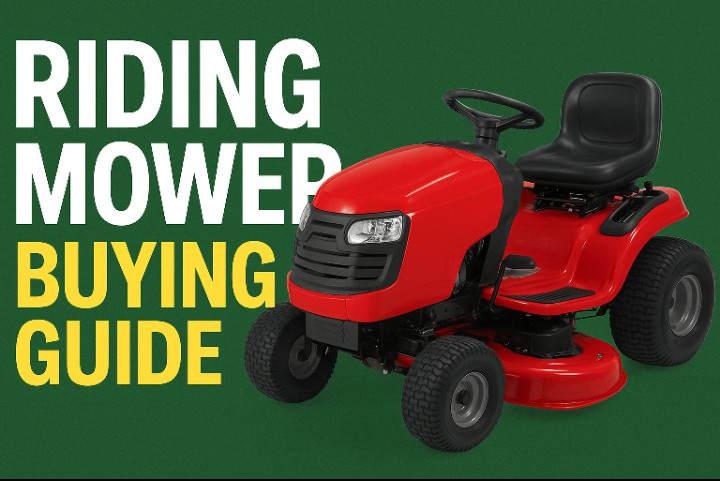
Picking the right riding mower should not feel like rocket science. Yet here we are, staring at dozens of options and wondering what half these features even mean. Let’s break it down together.
WHY CHOOSE A RIDING MOWER
Your back will thank you. Not joke bro.
Push mowers get the job done on smaller yards. But once you hit half an acre or more, you’re in for a workout. I have watched neighbors trudge behind push mowers every Saturday morning on their two-acre lots. By lunchtime, they are wiped out.
Riding mowers flip that script entirely. You are sitting down while the machine handles the heavy lifting. Lowe’s and Consumer Reports both say properties over half an acre really need this upgrade. The time you save adds up fast.
Just Think, three hours of pushing becomes one hour of riding. That’s two extra hours for grilling out or watching your kids play soccer.
UNDERSTANDING RIDING MOWER TYPES
Four basic types fill the market today. Each one tackles different yard situations.
Standard Riding Lawn Mowers (Lawn Tractors)
Think small tractor with a steering wheel. Pretty straightforward.
These machines handle half an acre up to three acres comfortably. Lowe’s and Home Depot both back up those numbers. Deck sizes run from 38 inches to 54 inches. That’s your cutting width in one pass.
Most folks start here. The steering wheel feels natural. No weird learning curve like some other types.
Zero Turn Radius Mowers (ZTR)
These look wild at first glance. Two lap bars replace the steering wheel.
Home Depot says they are perfect for one to three acres of flat ground. Deck sizes go from 34 inches up past 60 inches. Consumer Reports confirms they spin a full 360 degrees without moving forward.
Imagine weaving between trees and flower beds like threading a needle. ZTR mowers nail this. Lots of obstacles? This is your machine.
Those lap bars take getting used to though. First twenty minutes feel awkward. After an hour, most people have it down.
Rear-Engine Riding Mowers
Engine sits in back on these models. Makes them more compact.
Home Depot lists deck sizes from 30 to 38 inches. They cost less than other types. That low center of gravity helps on slopes.
Here is the catch though. Consumer Reports ran extensive tests on these. Their April 2025 results? These mowers “perform worse than the other variety.” Worth keeping in mind.
Garden Tractors
Garden tractors don’t mess around. Built like tanks compared to regular lawn tractors.
Home Depot confirms they work best on one to three acres when you need multiple functions. Heavy-duty frames and transmissions accept attachments easily. Snow plows and tillers bolt right on.
Summer mowing, winter snow removal. That’s the whole point of garden tractors.
ELECTRIC VS GAS RIDING MOWERS
This decision carries more weight than people think.
Gas Riding Mowers
Gas delivers raw power. Period. Fill the tank and mow until you are done. No waiting around for batteries.
Lowe’s, Home Depot, and Consumer Reports all agree gas handles large yards and hills better. That power gap shows up fast on slopes.
You will deal with oil changes, spark plugs, and filter swaps. These tasks come with the territory. But that power and unlimited runtime? Worth it for many homeowners.
Electric/Battery Riding Mowers
Battery mowers are where things are headed. Quieter, cleaner operation.
Consumer Reports’ July 2025 data shows runtime hitting two acres per charge. Home Depot verifies zero emissions and whisper-quiet performance. Your neighbors will actually appreciate this.
Busy homeowners love the low maintenance angle. No oil changes whatsoever. Saves weekends for actual fun.
They cost more up front though. Consumer Reports does not sugarcoat that. Their July 2025 take is brutally honest: these mowers are “too new a category for us to judge long-term predicted reliability.”
Resale value stays uncertain for now.
MATCHING RIDING MOWER TO LAWN SIZE
Right size matters hugely. Too small wastes your time with endless passes. Too big wastes your money.
Lowe’s laid out this verified chart:
Three-quarters to one acre needs 30 to 42 inch decks. One to two acres requires 42 to 48 inches. Two to three acres demands 48 to 54 inches. Three to five acres needs 48 to 60 inches. Over five acres? Go 60 inches or bigger.
Dave Trezza from Consumer Reports said it perfectly in May 2025: “Once you get over an acre, it’s time for a riding lawn mower for sure.”
Measure what you actually mow. Houses, driveways, and wooded areas don’t count. That’s your real working space.
ENGINE AND TRANSMISSION
Technical stuff sounds boring until you realize it affects everything.
Engine Types
Two types run the show. Single cylinder engines save money upfront. Lowe’s says they handle basic mowing fine. Smaller properties don’t need more.
V-twin engines bring serious power and torque. Lowe’s research proves they run smoother with way less shaking. Quieter too. Better cooling means they last longer. That extended lifespan justifies spending more for plenty of buyers.
Transmission Types
Three options exist here. Manual transmission means shifting yourself. Cheapest route. Home Depot and Lowe’s both call this the budget pick.
Automatic transmission handles shifts automatically. No clutch to worry about. Both Home Depot and Lowe’s confirm easier operation.
Hydrostatic transmission wins most popularity votes. Lowe’s explains it runs on fluid, not belts. Speed changes feel buttery smooth. Needs less maintenance overall. Outlasts other types too.
Most buyers go hydrostatic nowadays. That smoothness and dependability make sense.
ESSENTIAL FEATURES
Features separate decent mowers from excellent ones.
Cutting System
Three methods cover your bases: mulching, bagging, side-discharge. Consumer Reports says modern mowers mostly offer 3-in-1 switching. Change methods whenever you want.
Lowe’s and Consumer Reports both verified this.
Key Features Worth Considering
Cruise control shows up on pricier models. Lowe’s and Consumer Reports both list it. Big properties make this feature shine.
Battery models cut in reverse without issue. Consumer Reports confirms every battery model includes this. Gas models usually kill the blades backing up for safety reasons.
High-back seats with lumbar support matter on big properties. Lowe’s and Home Depot both mention this. Long sessions stay comfortable.
Armrests help tired arms. Cup holders keep water handy during breaks. LED headlights let you finish after sunset.
Washout ports simplify deck cleaning. Consumer Reports calls this out specifically. Hook up your garden hose and blast away caked grass.
All-in-one oil change cartridges make maintenance less messy. Lowe’s says these combine oil and filter together. No draining nonsense.
SAFETY CONSIDERATIONS
Safety features stop accidents before they happen.
Critical Safety Features
Operator presence control kills blades instantly. Home Depot confirms this kicks in when you stand up. Accident rates drop significantly.
Blade disengagement during reverse prevents backup disasters. Blade guards block flying junk. Home Depot lists both as standard on quality machines.
Terrain-Specific Safety
Hills need extra thought. Home Depot research shows rear-engine models handle slopes better. That low center of gravity prevents tipping.
ZTR mowers fight steep slopes more. Home Depot acknowledges this weakness. Flat yards suit them perfectly.
Operating Safety Basics
Clear debris before starting. Home Depot hammers this point. Sticks and stones turn into missiles.
Eye protection and hearing protection aren’t optional. Wear both every single time. Loose clothing catches in moving parts. Don’t risk it.
These basics prevent most injuries.
TOP BRANDS (2025)
Brand reliability matters when dropping serious cash.
Most Reliable: Kubota
Consumer Reports’ May 2025 findings put Kubota on top. They are the “only brand to earn top scores across the board” for reliability and owner satisfaction. Gas tractors and zero-turns both get stellar ratings.
That consistency counts when spending thousands.
Highly Rated: John Deere
John Deere pulls above average reliability scores. Consumer Reports shows high satisfaction from owners.
Popular picks include the X354 scoring 84 out of 100 at $5,000. The S240 also hits 84 out of 100. The Z530M ZTR costs $6,100.
Their 4-year warranty beats most competition. Consumer Reports verified these 2025 numbers.
Best Value: Cub Cadet XT2 SLX50
This one costs $3,999. Consumer Reports gave it perfect scores across all tests. The 50-inch deck tackles medium to large yards easily.
Value hunters should look hard at this model.
Other Reputable Brands
Toro, Husqvarna, Craftsman, and Troy-Bilt build quality machines. Family Handyman backs these brands. Each brings different features and pricing.
MAINTENANCE REQUIREMENTS
Proper care stretches mower life dramatically.
Break-In Period (New Mowers)
Change engine oil and filter after 5 to 8 hours. John Deere, Tractor Supply, and Briggs & Stratton all confirm this timing. Fresh engines need that early swap.
Before Each Use
Check oil every 5 hours minimum. Tractor Supply pushes this habit. Check tire pressure too per Lowe’s.
Look blades over for damage. Cub Cadet wants this quick inspection. Test safety stuff to verify blades stop within 5 seconds.
Quick checks catch big problems early.
Every 50 Hours or Annually
Change engine oil every 25 to 50 hours. MTD Parts and Lowe’s both say so. Swap the oil filter while you’re at it per MTD Parts.
Sharpen or replace blades now. Cub Cadet and MTD stick to this schedule. Dull blades rip grass instead of slicing clean.
Every 100 Hours or Annually
Swap the air filter. Tractor Supply and MTD Parts recommend this timing. Clean filters boost performance.
Replace fuel filter too. John Deere and Tractor Supply agree on this. Change spark plugs at season start and every 100 hours. Lowe’s and Tractor Supply confirm this.
End of Season Storage
Clean everything thoroughly. Tractor Supply emphasizes this. Get all grass and gunk off.
Drain fuel or add stabilizer for winter. Cub Cadet stresses this step. Store somewhere dry away from weather.
Lowe’s gives this rule: “Perform riding lawn mower maintenance every 100 hours of use.”
PRICING GUIDE (2025)
Budget planning prevents wallet shock.
Price Ranges by Type
Rear-engine models run $1,200 to $1,900. Family Handyman verified these numbers. Standard tractors cost $1,500 to $2,000. Zero-turns start at $3,000 and climb from there.
Specific Model Prices (2025)
Real numbers help planning. John Deere X354 costs $5,000. Cub Cadet XT2 SLX50 runs $3,999. John Deere Z530M ZTR hits $6,100. John Deere Z370R Battery ZTR costs $6,500.
Consumer Reports checked all these 2025 prices.
Electric vs Gas Pricing
Battery models usually cost more. Consumer Reports adds “not always” though. Their July 2025 research found Ego’s top battery ZTR costs “$2,000 less than top-rated gas ZTR.”
Shop smart and compare actual models.
EXPERT BUYING ADVICE
Professional tips save cash and headaches.
Choosing Between Tractor vs ZTR
David Trezza from Consumer Reports nailed it in April 2025: “If you have a fairly regularly shaped lawn and want that groomed look, it may be best to opt for a tractor. They generally provide a more even cut and cost less than a zero-turn-radius mower.”
Yards packed with obstacles benefit from ZTR flexibility.
Performance Expectations
Keep expectations realistic. David Trezza noted in Consumer Reports’ August 2025 piece: “You’ll get a decent cut from nearly all of the lawn mowers and tractors we’ve tested recently, as long as you sharpen the blades at the beginning of the mowing season and do other basic maintenance.”
Regular upkeep beats fancy brands.
POPULAR ATTACHMENTS
Attachments multiply what your mower does.
Baggers cost extra but grab clippings efficiently. Lowe’s confirms separate purchases. Winter stuff like snow plows and blowers stretch usefulness year-round. Home Depot lists both.
Summer gear includes lawn sweepers and spreaders. Utility trailers and dump carts move materials around. Home Depot backs all these.
Think about what you will actually use before buying extras.
UNDERSTANDING KEY TERMS
Some words confuse first-time shoppers.
Deck width measures cutting width in inches. Wider finishes faster but costs more.
Hydrostatic transmission uses fluid for smooth variable speed. Lowe’s explains this clearly.
ZTR means zero-turn radius mower. Consumer Reports uses this shorthand constantly.
V-twin engine means two-cylinder setup. Lowe’s confirms more power than single-cylinder versions.
THE END
This decision deserves time. Don’t rush.
Measure your property for real. Be honest about budget. Think through terrain issues. Match features to actual needs, not wants.
The right riding mower turns exhausting chores into manageable tasks. Weekends open back up. Lawns look better with less sweat.
Hit up dealers and actually sit on models. Try the controls yourself. Ask every question that pops up. Good dealers answer without rushing you.
Remember what Consumer Reports says about maintenance. Even top-tier mowers need care. Plan time and money for upkeep.
Your property deserves proper equipment. Take time choosing wisely. Good investments pay off for years.