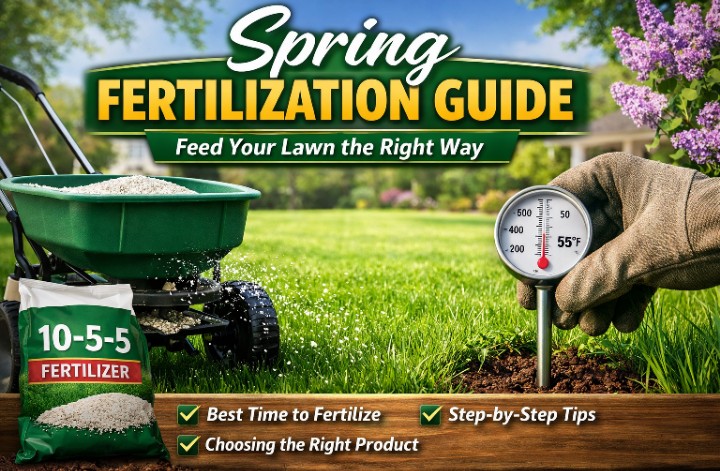
Your lawn just survived winter. Months of cold and zero nutrition. It’s exhausted and hungry.
One good spring feed changes that fast. Grass gets thicker. Color comes back. Weeds struggle to compete.
At Ex Landscaper we keep things simple for homeowners. This guide covers when to feed, what to buy and how to apply it right. No fluff Just what actually works.
Your Lawn Wakes Up Hungry in Spring
Winter puts grass into full sleep mode. Roots slow down. Growth stops completely.
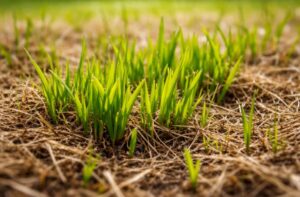
Then spring arrives. Soil warms up. Grass starts pushing new growth fast. The first thing it needs is nitrogen. Without it, turf stays thin and pale.
Actively growing grass uses a great deal of energy from soil nutrients. Feeding it supports new leaf and root growth and helps the lawn bounce back from stress and foot traffic damage. [lowes]
A well-fed spring lawn also holds moisture better. It resists weeds longer than a lawn that got skipped.
Your Grass Type Decides When and What to Feed
Not every lawn works the same way. Feeding the wrong type at the wrong time wastes money.
Cool-season grasses include Kentucky bluegrass, tall fescue and perennial ryegrass. They grow best in mild weather. Spring and fall are their strongest seasons.
Warm-season grasses include Bermuda, Zoysia and St. Augustine. They go dormant in winter and only green up when soil gets properly warm in late spring.
Heres a quick way to tell them apart. Cool-season grass greens up early in spring. Warm-season grass stays brown much longer then bounces back fast once temps rise.
Know your grass type first. Every other decision flows from that.
Read more: Organic vs Synthetic Fertilizer: Which One Grows a Better Lawn?
Feed When Soil Hits 55°F Not a Day Before
Timing trips up more homeowners than anything else. Feeding too early means nutrients wash away before roots can use them.
Soil temperature needs to reach 55°F consistently before fertilizing. That usually lands around March to April in spring. [golfcourselawn]
For cool-season grasses fertilize lightly in early spring. Time your schedule so nutrients are used up before the summer heat hits and cool-season grasses go dormant.
For warm-season lawns wait until the grass starts showing green. Mid-spring is usually the right window.
Two easy visual cues work well here. You have mowed two or three times already. Or spring flowers like lilacs have started blooming. Either signal means the lawn is ready.
Pick a Fertilizer That Matches What Spring Grass Needs
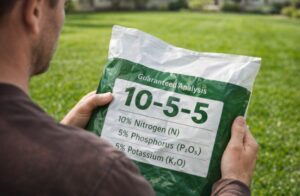
Every fertilizer bag shows three numbers. Something like 10-5-5 That’s the NPK ratio. Nitrogen comes first Phosphorus second Potassium third.
Nitrogen drives green-up and top growth in spring. That’s your main focus right now.
Granular fertilizers are the easier choice for most homeowners. You spread them once and they feed slowly over several weeks. Liquid fertilizers green things up faster but need more careful timing.
Compost and composted organic materials work well as natural fertilizers. They are high in nitrogen and have soil-building properties that help long term. Just make sure any manure-based product is fully composted before applying or it can burn the lawn. [growingagreenerworld]
Before buying anything run a quick soil test. It tells you exactly which nutrients are missing. That way you are not guessing at the store.
For spring stick with a balanced or nitrogen-rich formula. Skip heavy phosphorus blends unless your soil test points that way.
Prep the Lawn Before You Spread a Single Granule
Feed works better when the lawn is ready for it. A little prep goes a long way.
Mow the lawn one or two days before fertilizing. This removes dead growth and helps granules reach soil level. Then rake away any thick thatch or moss sitting on the surface.
Aeration relieves soil compaction and helps the grass absorb nutrients more effectively. Overseeding thin spots at this stage gives new grass room to grow alongside the fertilizer boost.
Check soil moisture before starting. If the ground feels bone dry water it first. Fertilizing into dry soil is wasted effort. The granules just sit there doing nothing.
Read more: What NPK Numbers Mean for Your Lawn: The Complete Guide
Apply It This Way and You Won’t Go Wrong
Step1 — Measure your lawn area
Walk the length and width. Multiply them for square footage. For odd shapes break the yard into smaller rectangles and add them up.
Step2 — Follow the label rate exactly
More product does not mean faster results. Too much nitrogen burns grass and creates weak floppy growth. When in doubt apply slightly less than the label says.
Step3 — Calibrate your spreader before starting
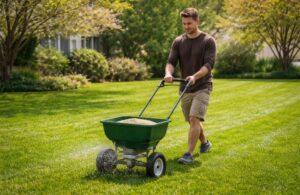
Set the spreader to the right opening size for your product. Walk in straight overlapping lines. Stay away from driveways and garden beds. Granules on hard surfaces stain and wash into storm drains.
Step4 — Water right after spreading
A quarter to half an inch of water moves nutrients into the soil. It also prevents burn on leaf blades. If light rain is forecast in the next day or two time your application just before it arrives.
These Mistakes Undo All Your Hard Work
Over-fertilizing is the most common one. Homeowners think more product equals faster green-up. It doesn’t It stresses the lawn and can cause real damage.
Feeding too early in cold soil is another trap. Nutrients sit in the ground and leach away before roots wake up enough to absorb them. Always wait for that soil temperature signal.
Skipping the watering step causes burn. Dry grass blades sitting on top of granules can scorch quickly. Always water in after spreading.
Also sweep granules off driveways and sidewalks right after finishing. They wash into storm drains and pollute nearby waterways. A quick sweep takes thirty seconds.
A Simple Two-Feed Plan for Both Grass Types
No complicated schedules needed here. Two feeding windows per grass type is all most lawns need.
Cool-season lawns
Early to mid-spring is the first window. Apply a light nitrogen feed to kick-start green-up. Avoid feeding into cold or dry soil. Late spring is an optional second feed if growth starts to slow. Keep it balanced and avoid a heavy nitrogen push before summer arrives.
Warm-season lawns
Mid-spring is when the first feed happens right as the grass turns green and temperatures rise. Don’t feed before you see active greening. A light follow-up in early summer supports steady growth. Stick to label directions and avoid overfeeding during peak summer heat.
Two feeds. Done right. That covers most home lawns through the season.
Here is How You Know the Feeding Actually Worked
Give it four to six weeks after the first application. Then walk the lawn slowly and look for these changes.
Color becomes more even across the whole yard. Patchy yellow fades out. Bare spots start to fill in. Turf feels denser underfoot.
Healthy soil from proper feeding improves water retention and reduces runoff on previously compacted patches.
Weeds and moss tend to pull back too. Not because of any spray. Thick healthy grass naturally crowds them out over time.
Track how often you mow. More frequent mowing means active growth. That’s your clearest sign the fertilizer did its job.
Read more: Liquid Fertilizer Application Guide 2026
Quick Spring Fertilizing Checklist
Run through this before you start:
– Confirm grass type — cool-season or warm-season
– Check soil temperature — at or above 55°F
– Pick the right NPK formula for spring growth
– Mow and tidy the lawn one to two days before feeding
– Test soil moisture and water if dry
– Calibrate spreader before starting
– Apply at label rate — never more
– Water lightly right after spreading
– Sweep granules off all hard surfaces
– Skip feeding during drought or extreme heat
– Check results at the four to six week mark
FAQs
Can I fertilize my lawn right after the last frost?
Not immediately. Wait until soil temperature reaches 55°F consistently. Frost ending does not mean the ground is warm enough. Applying too early means nutrients wash away before roots can use them. Watch for active grass growth as your real signal.
How often should I fertilize in spring?
Once is usually enough for most home lawns. One well-timed feed in early to mid-spring does the job. A light second feed in late spring is optional if growth slows down. More than two applications in spring is rarely needed and can push too much soft growth before summer.
Is organic fertilizer better than synthetic for spring?
Both work, Organic options like compost and blood meal release slowly and build long-term soil health. Synthetic fertilizers work faster and give quicker green-up results. Organic materials like composted manure are high in nitrogen and help build soil over time. The key is making sure they are fully composted before applying. For most homeowners a slow-release synthetic or a quality organic blend both get good spring results.
What happens if I use too much fertilizer in spring?
The lawn gets burned. Grass blades turn yellow or brown at the tips. Roots get stressed and weak floppy top growth appears. Too much nitrogen also encourages fast soft growth that is more vulnerable to disease and pests. Always follow the bag rate and apply less when unsure.
Do I need to water after fertilizing in spring?
Yes every time. Watering after application moves nutrients into the soil and helps prevent grass burn from granules sitting on dry blades. A quarter to half an inch of water is enough. Rain in the next day or two also works perfectly. Just don’t skip this step.
Spring lawn care doesn’t need to be complicated. One well-timed feed does more than three rushed ones. Start simple. Watch the lawn respond. Adjust from there next season. Okey thanks for reading and if you have any question, just comment bellow. Bye
Read More: The Best Time To Fertilize Your Lawn