Most homeowners think a short lawn looks clean and neat. But cutting grass too short is one of the most common lawn care mistakes out there. The good news? A simple height adjustment can transform your lawn without extra chemicals or watering.
Let’s break it all down.
Why Mowing Height Is More Important Than You Think
You might be mowing every week and still wondering why your lawn looks patchy or full of weeds. Height is often the reason. Grass cut too short gets stressed fast. It struggles to hold moisture. Weeds sneak in through the bare spots.
On the flip side, keeping your grass a little taller means stronger roots, less evaporation and fewer weeds fighting for space. Over at Ex Landscaper, this is one of the first things we tell homeowners who want a healthier yard without doing more work.
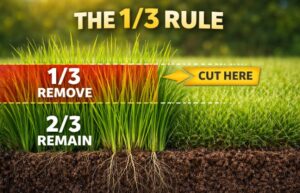
The 1/3 Rule Is the Golden Rule of Mowing
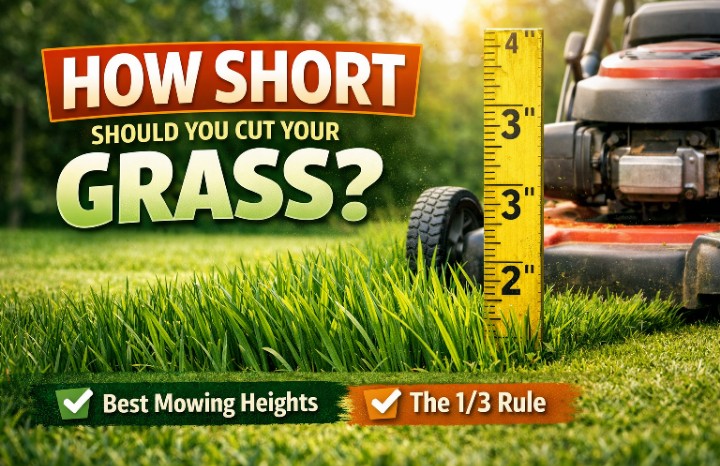
Here’s the one rule that matters most: never cut more than one-third of the grass blade in a single mowing session.
So if your target height is 3.5 inches, don’t wait until the grass hits 7 inches. Mow it when it reaches around 5 inches instead. Simple
Why does this matter? Cutting too much at once shocks the plant. The roots take a hit. The grass gets weak. And that’s when diseases and bare patches show up.
Keeping this rule in mind also means your lawn bounces back fast. The blade keeps enough surface area to absorb sunlight and keep growing strong.
Read more: February Lawn Preparation 7 Steps to Get Ready for Spring
Recommended Mowing Heights by Grass Type
Not all grass is the same. Cool-season and warm-season grasses have different needs. Using the wrong height for your grass type is like wearing the wrong shoes for the weather — it just does not work well.
Cool-Season Grasses
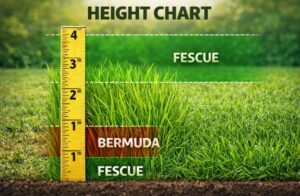
These grow best in spring and fall. Think Kentucky bluegrass, tall fescue, fine fescue and perennial ryegrass. Most of these do well somewhere between 2.5 and 4 inches. Kentucky bluegrass sits best at 2.5 to 3.5 inches. Tall fescue handles a bit more height, doing well at 3 to 4 inches. Perennial ryegrass and fine fescue both fall in a similar range of 2.5 to 3.5 inches. According to LawnStarter’s grass height guide, many lawn pros recommend staying in the 3 to 3.5 inch range as a reliable sweet spot for most cool-season lawns.
Warm-Season Grasses
These thrive in summer heat. Bermuda, zoysia, St. Augustine, centipede and bahiagrass all fall in this group. Their ranges vary quite a bit. Common bermuda stays healthy at 1 to 2 inches while hybrid bermuda can go even shorter at 0.5 to 1.5 inches. Zoysia does well between 2 and 3 inches. St. Augustine prefers a taller cut of 2 to 4 inches with dwarf varieties sitting closer to 2 to 2.5 inches. Centipede grass works best at 1.5 to 2 inches and bahiagrass is comfortable anywhere from 2.5 to 4 inches. The MowGuide mowing height chart is a handy reference if you want a full breakdown by variety.
To know when to mow, just apply the 1/3 rule to your target height. If your target is 3 inches, mow before it hits 4.5 inches.
If you are not sure what grass you have, a quick photo search or your local extension office can help you figure it out.
How to Adjust Mowing Height by Season
Grass height is not a set-it-and-forget-it deal. The right height shifts with the seasons.
Spring
For cool-season lawns, raise your mower height gradually as growth picks up. Don’t try to do one deep cut to “clean up” the winter mess. That approach stresses the grass more than it helps. For warm-season lawns, wait until the grass is fully green and growing again before settling into your target height. The University of Arkansas Extension mowing guide points out that gradual height adjustments in spring lead to much better recovery than aggressive early-season cuts.
Summer
This is where taller grass really earns its keep. Cool-season grasses benefit most from being kept at 3 to 4 inches during hot months. The extra height shades the soil and keeps moisture from escaping quickly. Warm-season grasses should stay within their recommended range too don’t drop below the minimum just because it looks neater.
Fall and Winter Prep
For cool-season grasses, your last few mows of the year should stay in the 2.5 to 4 inch range depending on your climate. Going too short before winter leaves the roots exposed. Warm-season grasses should gradually come down in height before going dormant but still within their normal range.
Read more: Best Time of Day to Mow Your Lawn
Taller Grass Means Less Work in Other Areas Too
This part surprises a lot of homeowners. When you mow at the right height, several other things get easier.
Watering: Taller grass blades shade the soil. That slows down evaporation. So you end up watering less, especially in summer.
Weeds and pests: Cool-season lawns kept at 3 to 4 inches show noticeably fewer crabgrass and broadleaf weeds. Fewer weeds means less herbicide. Michigan State University Extension explains that mowing high for weed and grub control is one of the most effective and chemical-free ways to keep problem plants out of your yard.
Mowing frequency: Staying within the 3 to 4 inch range can reduce how often you mow by a day or two each week in many cases. Because you are removing a smaller percentage each time, the grass doesn’t rush to recover as fast.
Common Mowing Mistakes That Hurt Your Lawn
These are easy to fall into without realizing it.
Cutting too short like a golf course Home lawns are not golf fairways. Cool-season grass cut under 2 inches faces more heat stress and weed pressure. The grass just isn’t built for that.
The spring scalp. Some homeowners like to cut real low in early spring to “start fresh”. It feels logical but it goes against everything the 1/3 rule stands for. It shocks the lawn right when it’s trying to wake up.
Using the same height all year: Grass needs change. Summer and fall are not the same situation. Treating every mow the same ignores how grass actually grows.
How to Find the Right Mowing Height for Your Lawn
You don’t need to be a turf expert to get this right. Here is a simple four-step process:
Step-1: Figure out your grass type. Cool-season or warm-season? Use a photo or check with your local extension service if you’re not sure.
Step-2: Look up the recommended height range for your specific grass using the breakdown above or the Angi mowing height reference for a quick visual guide.
Step-3: Set your mower to the higher end of the range. For most cool-season lawns that’s around 3 to 3.5 inches. Only go lower if you notice the grass flopping over or building up thatch.
Step-4: Follow the 1/3 rule every time you mow. And adjust slightly with the season.
Read more: Here Are Some Basic Lawn Care Steps Every Homeowner Should Know
FAQs
What is the best mowing height for most home lawns?
For cool-season lawns like Kentucky bluegrass, tall fescue and ryegrass blends, 3 to 3.5 inches is widely considered a healthy range. For warm-season lawns, stay within 1 to 3 inches depending on your grass type bermuda does well at 1 to 2 inches while zoysia sits better at 2 to 3 inches.
Should I mow shorter in summer?
No. For cool-season grasses, taller is actually better in summer 3 to 4 inches helps reduce heat and drought stress. For warm-season grasses, stick to the middle of your recommended range and don’t drop below the minimum just because it looks tidier.
Is 2 inches too short?
For most cool-season grasses, yes. Lawn care professionals generally recommend at least 3 inches for health and durability. For warm-season grasses like common bermuda, 2 inches can be fine since it falls within the upper part of the recommended range.
How does the 1/3 rule work in real life?
If your target is 3 inches, mow before the grass hits 4.5 inches. If it’s already at 5 or 6 inches, split it into two separate mowings a few days apart rather than cutting it all at once. This keeps the lawn from going into shock.
Will raising my mower height mean mowing more often?
Actually the opposite. Higher cuts remove less blade per session so the grass does not try to regrow as aggressively. Raising the deck height often means fewer mowing sessions over the course of a season.
Can I trust my mower’s numbered dial settings?
You can use them as a guide but always double-check with a ruler. Many residential mowers top out around 3 inches on the highest setting. Measure from the blade to the ground on a hard flat surface to confirm you are actually hitting your target height. Okay, Thanks for reading Full article. Bye bye
Read more: How to Start a Lawn Care Routine for Beginners 2025