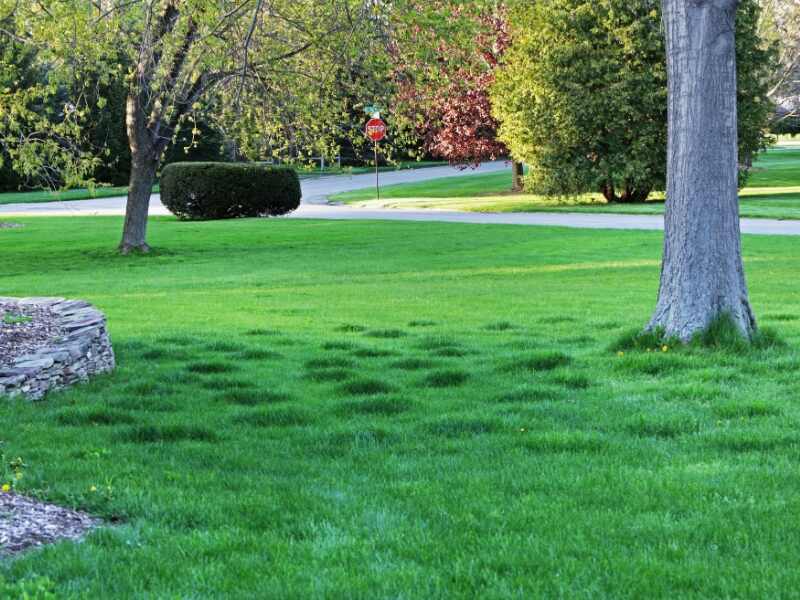
I have never seen a bare patch in a lawn fix itself. Left alone, I have seen weeds move in and the soil erode. But the good news is that if you work with the right timing, the right seed and a bit of patience, most bare spots can be repaired. In this guide, I will share my experience-based, step-by-step approach to reseeding bare patches.
Before that, it’s important to understand:
Why Do Bare Patches Form in a Lawn?
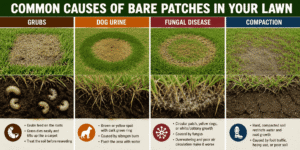
Before reseeding, we should understand the real cause of the damage. Seeding without knowing the cause can lead to the same problem happening again.
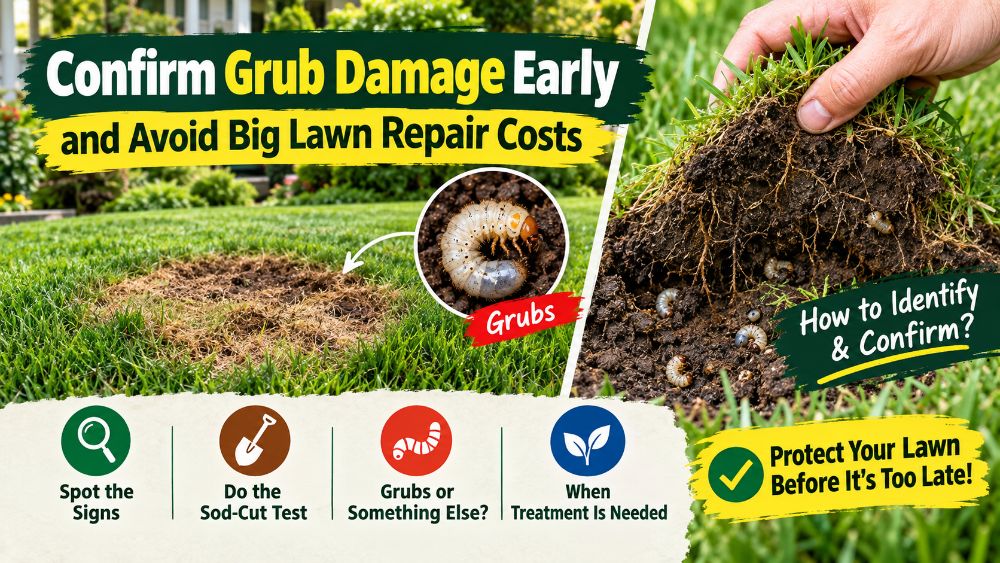
Grubs (soil-dwelling insects): If dead grass lifts away easily, like a loose carpet, that indicates grubs feeding on the roots. Treat the soil before reseeding.
Dog urine: A brown center surrounded by a darker green ring points to this cause. The nitrogen in urine burns the grass at high concentrations. In this case, flush the area with water to dilute the nitrogen.
Fungal disease: Circular patches, white or cottony coating or yellow rings indicate fungal disease. Overwatering and poor air circulation make the problem worse.
Soil compaction: Repeated foot traffic near gates, under swings, or along paths dogs use packs the soil down. Compacted soil restricts water, air and root growth.
Shade and drought stress: Grass thins out under trees or in dry areas because it isn’t getting what it needs to grow.
The Best Time to Reseed Bare Patches
In my view, fall is the best time for cool-season lawns in Zones 5–7. According to Iowa State University Extension, mid-August to mid-September is considered the ideal window for renovating thin lawns. During this period the soil stays warm while the air cools, which helps seed germinate faster and reduces competition from weeds for the new grass.
I’ve found that spring seeding is possible too but it’s the second choice. According to Kansas State University Extension, mid-March to early April is the best window for spring. However, this gives roots less time to establish before summer heat arrives, and weed pressure is also higher in spring.
If there is winter damage, new construction work or pet damage, seeding in spring makes sense. Waiting until fall isn’t always practical.
How to Prepare the Soil
Soil preparation matters more than the seed itself.
- Remove dead grass and thatch from the bare area. Leftover thatch prevents seed from reaching the soil.
- Loosen the top two to three inches of soil with a rake or hand cultivator.
- If the soil feels compacted or lacks nutrients, mix in fresh topsoil or compost.
- Level the area to match the surrounding lawn.
- Trim the surrounding grass down to one and a half to two inches. This reduces competition for the new seedlings and looks better too.
Choosing the Right Grass Seed
In my view, rather than grabbing whatever’s available at the store without thinking, it’s better to choose seed suited to the site’s conditions.
Sunny areas: Kentucky bluegrass is the most common choice for Zones 5–7. Iowa State Extension recommends blending two or three bluegrass cultivars together to improve disease resistance.
Shaded areas: Fine-leaf fescues, such as creeping red fescue or chewings fescue, tolerate shade better than bluegrass or ryegrass.
Mixed conditions: A blend of Kentucky bluegrass, perennial ryegrass and fine fescue works well for both sun and shade.
My advice: always match the seed to the existing surrounding grass. Using a different type of seed can make that patch look and feel different from the rest of the lawn.
Getting Good Seed-to-Soil Contact
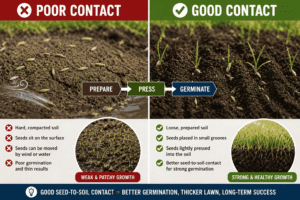
Simply scattering seed over hard soil usually does not work. Seed needs direct contact with the soil to germinate.
For small patches, hand raking is enough. Lightly press the seed into the soil with the back of the rake or your foot this helps.
For larger areas, core aeration or a vertical mower gives better contact. A core aerator pulls small soil plugs out of the lawn and dragging the area afterward works seed into those holes. A vertical mower cuts narrow grooves into the soil so seed settles below the surface rather than sitting on top.
Watering Rules After Seeding
I have seen most people make mistakes at this stage. New seed needs consistent moisture, but that doesn’t mean dumping a lot of water at once.
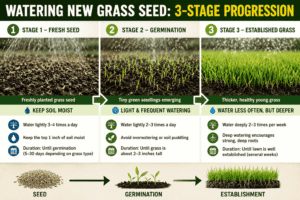
- For the first two to three weeks, until germination, water lightly three to four times a day.
- Keep the top inch of soil moist but not muddy.
- Once seedlings emerge and start growing, gradually reduce watering frequency while watering more deeply each time. This helps roots grow deeper.
- Avoid walking on the area while it’s wet. roots struggle to grow in wet, compacted soil.
When to Mow New Grass
Wait until the new grass is about three to four inches tall before the first mow. Mowing too early stresses roots that haven’t fully established yet. After the first mow, gradually return to your normal routine for cool-season lawns, that’s typically around three inches.
High-Traffic Areas
If the same bare spot keeps forming repeatedly like a path to a gate or a shortcut across the yard — reseeding alone may not solve it. Repeated foot traffic will recompact the soil before new grass can establish. Instead of fighting this every season, consider adding a stepping-stone path or a mulched walkway in that spot.
Common Mistakes to Avoid
- Seeding directly over a grub or fungal problem without identifying the actual cause.
- Seeding onto hard, compacted soil without loosening it first.
- Overwatering, which increases the risk of fungal disease in new seedlings.
- Mowing too soon before roots are established.
- Using old seed that doesn’t match the rest of the lawn.
FAQs
Can I just scatter seed onto a bare patch without preparing the soil? No, For good germination seed needs direct contact with loose soil. Simply scattering seed onto hard or compacted soil usually doesn’t give good results.
How long does it take for grass seed to fill in a bare patch? It depends on the type of grass. Perennial ryegrass typically germinates in 5 to 14 days. Fescue takes about 7 to 20 days. Kentucky bluegrass is the slowest, often taking 14 to 30 days.
Is spring or fall better for reseeding bare patches? Fall is better for cool-season lawns in Zones 5–7. If waiting is not possible, spring is a workable alternative but it comes with higher weed pressure and less time for root establishment.
Does a bare patch always mean grubs? No, Grubs are one common cause, but dog urine, fungal disease, soil compaction and shade stress can all create bare patches. Look closely at the pattern and shape of the damage before starting treatment.
Should I use sod or seed for a bare patch? Seed is more affordable and works well for most bare patches. Sod gives faster, instant coverage but costs more and is generally used for smaller, more visible areas.
Conclusion
Reseeding a bare patch is not complicated, but it does take patience. First identify the real cause of the damage, prepare the soil properly, choose seed suited to the site and water consistently. Skipping the preparation step increases the chances the area will go bare again. Bye Bye…..