Why Does Lawn Have Brown Circular Spots? Recognizing and Treating Brown Patch
When round brown patches suddenly appear on a lawn, I have often heard people say it’s grubs or dog urine. But in some cases, the real cause is a specific fungal disease called Brown Patch. In todays article, I will explain how to identify this disease, why it happens and what you should do before reseeding.
What Brown Patch Actually Is
According to Penn State Extension, Brown Patch is a fungal disease caused by a fungus called Rhizoctonia solani. It appears on golf courses, sports fields and ordinary home lawns alike and it’s best known as a warm-weather problem.
Missouri Extension notes that this fungus survives dormant in thatch and soil (in structures called bulbils), and becomes active and attacks grass leaves when conditions are favorable.
Which grasses are most affected: According to Penn State Extension, perennial ryegrass, tall fescue and bentgrass are at the highest risk. Kentucky bluegrass can occasionally be affected too, though I have generally seen this happen during extended periods of intense heat and humidity.
When and Why This Disease Spreads
According to Missouri Extension, Brown Patch begins spreading rapidly when nighttime temperatures exceed 70°F thats mean 21°C and leaves stay wet for more than 10 hours at a stretch. When rainy, humid weather persists for extended periods at temperatures between 70–90°F, the problem tends to become more severe.
The same source also notes that high nitrogen levels in the soil increase disease severity and this applies to both tall fescue and creeping bentgrass.
How to Identify It
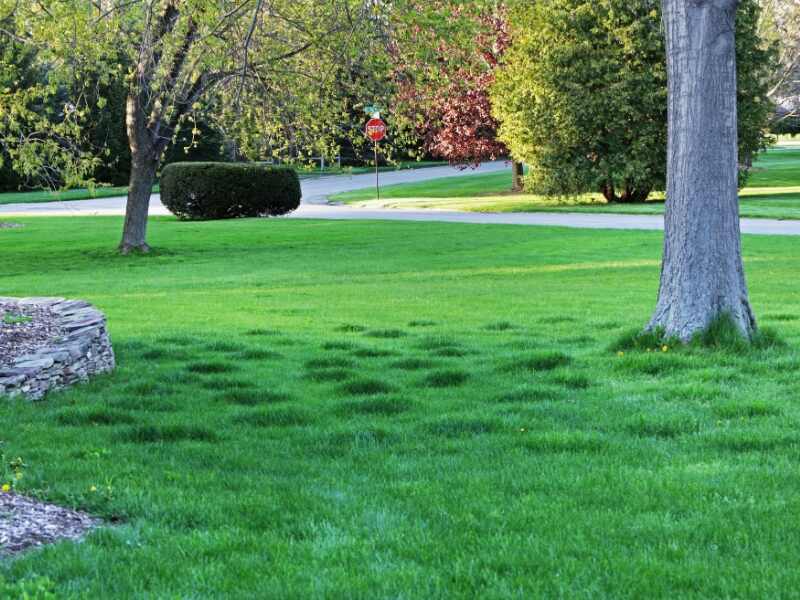
According to UNH Extension, Brown Patch typically appears as roughly circular brown patches, ranging in size from a few inches to two feet or more. On home lawns with longer grass, these patches are often six inches to two feet or more in diameter.
According to Penn State Extension, closely examining dew-covered grass in the early morning may reveal white fungal webbing (mycelium) within the patch. In some cases, all the grass within the patch appears dead, while in others the grass simply thins out and shows milder symptoms.
How to Tell It Apart From Other Causes
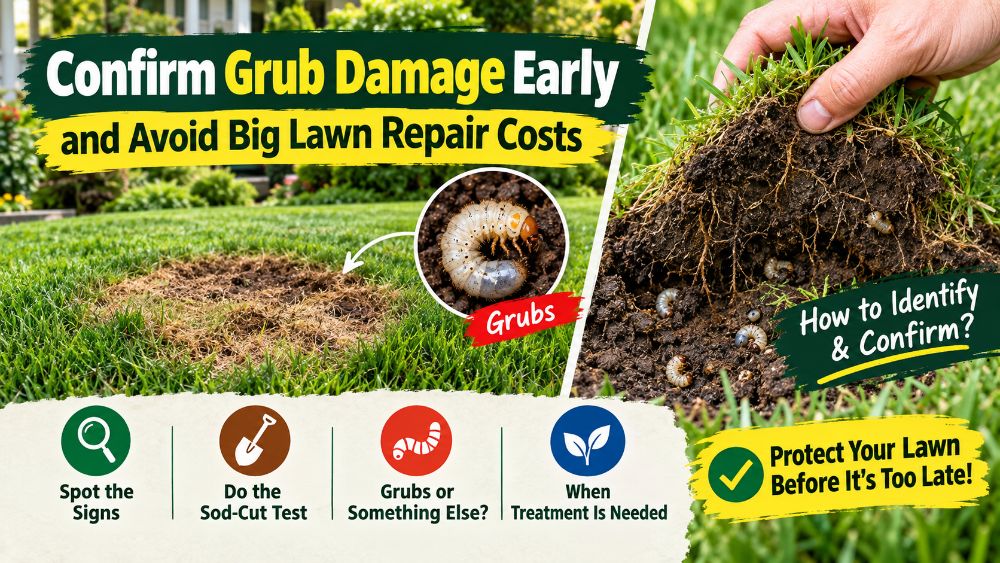
Not every brown spot on a lawn is Brown Patch. It’s important to understand how it differs from the dog urine and grub symptoms discussed in our main guide with grubs, the grass lifts away easily like a loose carpet, while dog urine spots show a brown center surrounded by a darker green ring. Brown Patchs distinguishing features are its round shape and the presence of white mycelium on damp mornings.
Fixing It With Cultural Practices
UNH Extension recommends the following:
- Avoid excess nitrogen fertilizer during hot, humid weather. Using a slow-release nitrogen formulation lowers the likelihood of disease.
- Never mow grass while it’s wet.
- Water early in the day so the grass dries quickly and the leaves don’t stay wet for long periods.
- Remove thatch if the layer is thicker than one inch.
When Fungicide May Be Needed
According to UNH Extension, many fungicides are available on the market for controlling Brown Patch but they recommend contacting your local county Extension office for specific product or timing guidance, since this can vary by region and conditions. Generally, mild to moderate infections resolve on their own if the cultural practices above are followed properly.
What to Do Once the Disease Is Under Control
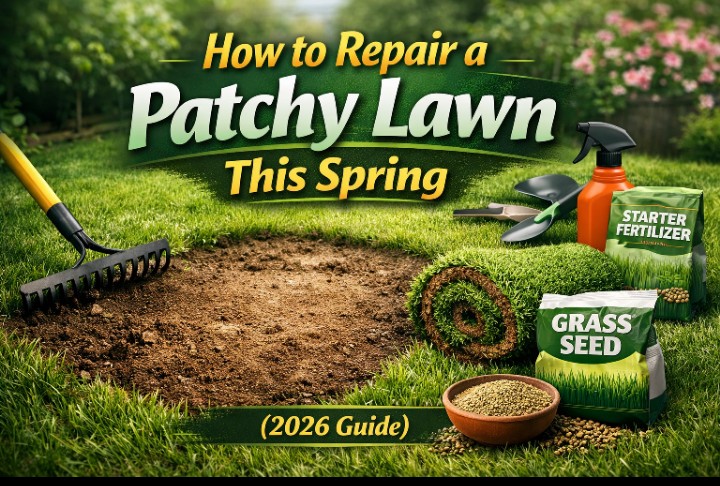
Brown Patch primarily affects the grass’s leaves and sheaths. After correcting cultural practices, if an area remains bare or thin, it may need to be reseeded. For the detailed step-by-step method of reseeding properly, see The Best Way I have Found to Reseed Bare Patches in Your Lawn.
Conclusion
Brown Patch is a specific fungal disease caused by hot, humid weather, elevated nighttime temperatures, excess nitrogen and prolonged leaf wetness. Correct identification and adjusting cultural practices are the most effective first steps in dealing with it. Okay, thanks for reading and if you have any question just comment. Bye Bye……