You walk outside one morning and the grass looks pale. Maybe thin. Maybe just not the deep green you were hoping for. Your first thought? Fertilizer. But then you are standing in the store aisle staring at liquid bottles on one side and big bags of granules on the other. You have no idea which one to grab.
That is exactly what this article is for.
Both types feed your lawn. Both deliver the nitrogen, phosphorus and potassium your grass needs to stay healthy. But they work in very different ways. Picking the wrong one for your situation can mean wasted money or a lawn that takes forever to green up.
Here at Ex Landscaper, we break things down for real homeowners. No confusing jargon, No fluff. Just straight answers.
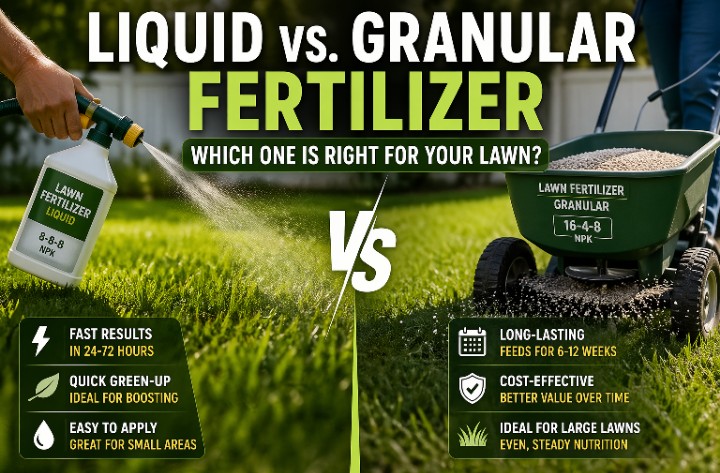
Simply put, liquid fertilizer is quickly absorbed by plants while granular offers slow-release nutrients over a longer period. That one difference changes everything about how and when you should use each type. According to Verdesian Life Sciences, both types supply the same essential NPK nutrients they just deliver them differently.
What Is the Main Difference Between Liquid and Granular Fertilizer?
The biggest difference is speed. Liquid gets to work fast. Granular takes its time but lasts much longer.
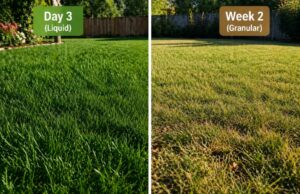
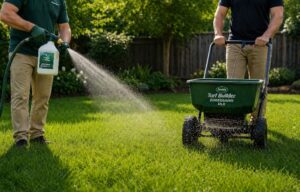
Here is how liquid works. It is mixed with water and sprayed onto the grass. Because it is already in solution form, the grass absorbs it almost right away through the leaves and through the roots. You might notice greener color within just a few days.
Granular fertilizer is different. It comes in solid pellet form. You spread it across the lawn and it waits for water to break it down. Once soil moisture and temperature activate those pellets, nutrients slowly release over weeks. Results take longer to show up. Usually one to three weeks before you see a real change.
In short, liquid is a shot of espresso for your lawn. Granular is a slow-cooked meal. One works right away. The other fuels your grass steadily for the long haul.
Does Liquid Fertilizer Actually Work Faster?
Yes. The gap is noticeable.
Liquid fertilizer can show visible results in as little as 3 to 7 days. This is especially true on lawns that were really hungry for nutrients. As noted by Harry’s Lawn Care, granular fertilizer takes one to three weeks to show visible results. It needs water and the right soil conditions to break down first.
Faster does not always mean better though. Liquid fertilizer burns through its nutrients quickly. Without another application, the green color fades in just a few weeks. Granular keeps feeding the grass steadily for 6 to 16 weeks depending on the product. That is a big difference in staying power.
Read more: Spring Fertilization Guide Feed Your Lawn the Right Way
Which One Costs More Over Time?
Here is the thing granular is generally the better deal. Especially for larger lawns.
Advanced Turf Care breaks down the numbers clearly. Granular covers 5,000 square feet for 10 to 16 weeks. Liquid covers the same area for only 6 to 8 weeks before needing reapplication. More applications means more money out of pocket over the season.
For large lawns over 5,000 square feet, granular makes even more sense. You use a broadcast spreader, cover the area efficiently and you are done for months. Trying to spray liquid fertilizer across a big yard means a lot of work and a lot of repeat trips.
For smaller yards under 2,000 square feet, liquid can be very practical. A hose-end sprayer makes application quick and easy. The cost per season stays manageable at that size.
How Does Soil Type Affect Which Fertilizer You Should Use?
First, know your soil. It matters more than most people think.
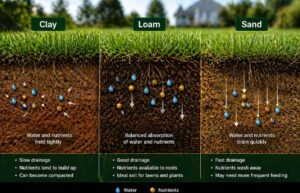
Clay-heavy soil holds moisture and nutrients well. Granular fertilizer works great in clay because the slow nutrient release matches how clay naturally holds on to things. Liquid can run off the surface if applied too fast on clay. You need to be careful with application speed.
Sandy soil is the opposite. It drains very quickly. Liquid fertilizer can wash through sandy ground before the grass gets a chance to absorb it. Granular tends to work better here because nutrients release steadily as water moves through the soil profile.
Loamy soil gives you the most flexibility. Both types work well in balanced loam. You can pick based on your goals rather than your soil type.
Not sure what your soil is? A simple soil test from your local extension service will tell you. It will also show if your soil pH is off. Poor pH affects how well any fertilizer performs regardless of type.
When Should You Choose Liquid Fertilizer?
Liquid is the right call when your lawn needs help fast.
Spring is a great example. After a long winter, grass is often weak and pale. A liquid application kick-starts growth and brings color back quickly before the growing season really gets going. Same goes for a bare or struggling patch. Liquid can target that area and show results within days.
It also works well as a mid-season turf nutrition boost. If your lawn starts looking tired in June or July, a liquid spray gives it a quick lift without the long wait. Think of it as a rapid green-up tool rather than a long-term feeding plan.
One important tip: apply liquid fertilizer during cooler parts of the day. Early morning is ideal. Hot conditions and bright midday sun increase the risk of leaf burn. Dry grass blades sitting in heat with nutrients on them can scorch fast.
Read more: Organic vs Synthetic Fertilizer: Which One Grows a Better Lawn?
When Should You Choose Granular Fertilizer?
Simply put, granular is your go-to for routine seasonal feeding.
If your lawn is already in decent shape and you just want to keep it that way, granular is the smart choice. One application feeds your grass for months. You put it down, water it in and let it work.
According to Lawn Love’s 2026 fertilizer review, The Andersons PGF Complete 16-4-8 is the top-rated spring granular. Milorganite Slow-Release is best for summer. Down to Earth Bio-Turf 8-3-5 leads the organic category. These are solid, well-tested options for western homeowners.
Granular also wins on large properties. Over 5,000 square feet, the extended feeding period makes dry fertilizer far more practical than repeated spray-on applications. Less work, Less cost. Same results over time.
After spreading, water it in within 24 to 48 hours. That activates the pellets and moves nutrients down to the root zone. Skip this step and dry granules sitting on warm grass can cause burn.
Can You Use Both Liquid and Granular Together?
Not at the same time. But using both throughout the season is actually a smart lawn fertilization schedule.
The best approach is simple. Granular goes down as the seasonal base. It gives steady long-term nutrition without much effort. Then liquid applications fill in the gaps whenever a quick boost is needed.
Here is the thing: granular is your lawn’s regular diet. Liquid is the targeted fix you reach for when things get rough. Together they cover everything a healthy lawn needs across the growing season.
Just do not apply both types back-to-back or on the same day. Too much fertilizer at once can damage the grass and push nitrogen release rate beyond what the turf can handle.
What About Burn Risk?
Both types can burn grass if misapplied. Liquid burns faster and more easily though.
Liquid nutrients go directly onto the leaf surface. Too much at once damages grass blades within hours. Hot weather and already-stressed turf make this worse. Always check the label rate before spraying.
Image Works Landscaping notes that granular fertilizers generally carry lower runoff and burn risk compared to liquid. That is true as long as you water them in properly after application.
Salt content plays a role too. Some liquid fertilizers have higher salt concentrations. That draws moisture out of the grass and causes stress. Pellet-based fertilizers tend to have lower salt content overall which makes them gentler on the turf.
Read more: What NPK Numbers Mean for Your Lawn: The Complete Guide
So Which One Should Western Homeowners Choose?
The bottom line is this for most homeowners with a standard-sized lawn, granular is the better everyday choice. It is cost-effective, low-maintenance and gives your grass steady feeding without constant attention.
That does not mean liquid has no place in your routine. For spring green-up, quick recovery or targeting a weak spot, spray-on nutrients get the job done when granular simply cannot move fast enough.
Start with a soil test. Know what your grass is actually missing. Then choose your products based on the time of year and your lawn’s real needs. Not just what is on sale.
Your lawn does not need the most expensive product. It needs the right one at the right time.
FAQs
Can I apply liquid fertilizer right before rain?
Better to avoid it. Rain washes liquid nutrients off the grass before roots get a chance to absorb them. Wait for a dry window of at least a few hours after application.
How often should I fertilize my lawn with liquid fertilizer?
Every few weeks during the growing season, depending on your grass type and the weather. Liquid works fast but runs out fast. Keep an eye on how your lawn looks and reapply when color starts to fade.
Does granular fertilizer need to be watered in right away?
Yes. Water it in within 24 to 48 hours. Dry granules sitting on warm grass can burn the blades. Watering moves nutrients off the surface and down into the soil where roots can reach them.
Is organic granular fertilizer worth it?
For long-term soil health, yes. Products like Down to Earth Bio-Turf 8-3-5 feed both the grass and the soil microbes underneath. Healthier soil means stronger grass over time. The tradeoff is slower results and a higher upfront cost.
What happens if I over-fertilize my lawn?
Too much fertilizer liquid or granular can burn the grass, cause rapid weak growth and contribute to waste through runoff. Always follow the label rate. More is not better when it comes to lawn fertilization.
The END
There is no single winner here. Both liquid and granular fertilizers do their job well, just in different situations.
Liquid works best when speed matters. Pale grass in early spring, a weak patch mid-summer or a lawn bouncing back from stress these are the moments liquid fertilizer earns its place. Nutrients reach the grass fast and results show up within days.
Granular is the better choice for routine care. It costs less over time, feeds the lawn steadily for weeks and works well on larger properties without constant reapplication. For most western homeowners, granular is the backbone of a solid fertilization plan through the growing season.
The smartest approach combines both. Use granular as your seasonal foundation. Reach for liquid when your lawn needs a quick fix. Start with a soil test so you know exactly what your grass is missing. Always follow label directions. The right amount at the right time makes all the difference.
A green, thick lawn does not happen by accident. But with the right fertilizer and a little timing, it is absolutely within reach. Thanks for reading and Bye Bye
Read more: Liquid Fertilizer Application Guide 2025