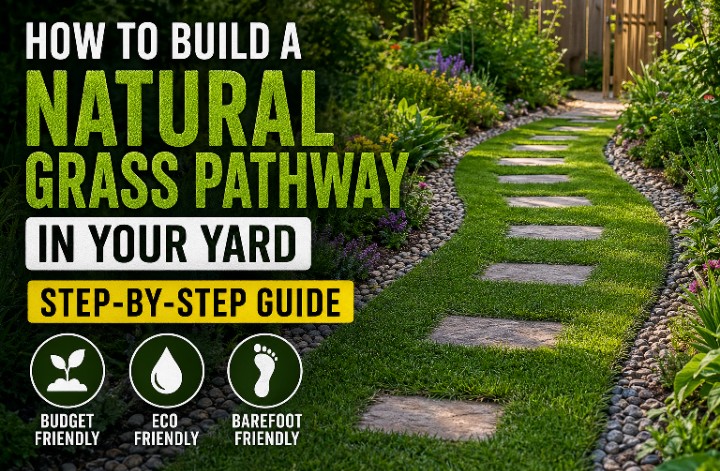
There is something about walking barefoot across your own backyard on cool soft grass. No hard edges. No gravel poking your feet. Just green turf and open air.
A grass pathway is one of those yard projects that looks like it took a professional but really did not. You can pull it off in a weekend. Spend under $100 on a short path. And end up with something your whole family actually uses every single day.
Here is everything you need to know to get it done right.
Why Are More Homeowners Building Grass Paths in 2026?
Honestly people are just tired of over-complicated yards.
The 2026 trend in lawn care is clear. Homeowners are moving away from traditional high-maintenance lawns toward designs that work with the local climate, save water and support local wildlife. [lawnmaster] A simple grass path fits that shift perfectly. No concrete to pour. No pavers to haul. Just living turf that handles light foot traffic and looks like it belongs there.
Rain soaks right through grass instead of running off into the street. Bees and butterflies get a soft green corridor through your yard. And your kids get a barefoot-friendly route from the back door to wherever they are going next.
Over at Ex Landscaper we hear from homeowners all the time who spent big money on stone paths and later wished they had just gone with turf. Simpler is often better.
What Grass Actually Holds Up to Foot Traffic?
Not all grass types are built the same. Some look great but fall apart fast under regular walking.
For cooler climates like the Pacific Northwest or Midwest, tall fescue is one of the toughest options out there. It roots deep, handles drought better than most and fills back in after heavy use. Kentucky bluegrass is another solid choice. It spreads on its own through underground runners so bare spots tend to heal without much help from you.
In warmer regions like Texas, California or the Southeast, Bermudagrass and Zoysia are the go-to picks. Both are built for heat, bounce back fast from traffic and stay dense even through a dry summer.
The one rule that matters most? Match your grass to your climate. What thrives in Oregon will struggle in Arizona. Your local garden center can point you to what actually works in your area. Worth a quick trip before you buy anything.
What Do You Actually Need to Buy?
Keep it simple. You do not need a truck full of materials for a basic grass path.
Sod rolls are the fastest way to get instant results. Roots establish within two weeks and the path looks finished right away. Grass seed costs less but takes longer. Either works fine depending on your patience and budget.
For a base layer, grab coarse sand or fine gravel. You want about 2 to 4 inches underneath the sod. This is what keeps the ground draining properly. Skip this step and the path turns into a muddy mess after a few rainstorms.
Flat stepping stones are optional but smart for high-traffic spots. They take the direct wear off the grass and give the path a more finished look.
Tools you already own will probably cover most of this. Flat spade, rake, garden hose and a mower for maintenance. A soil pH test kit is worth picking up too. Around $5 to $8 at any garden center and it takes five minutes to use.
Sod in most parts of the US runs between $0.50 and $1.00 per square foot locally. A 3-foot-wide path that is 20 feet long will cost you roughly $30 to $60 just for the sod. Very manageable.
How Do You Actually Build It?
Step-1: Walk Your Yard Before You Touch Anything
Seriously. Just walk around first.
Look at where your family naturally moves through the yard. High-traffic areas where the grass is already thin or worn are the best candidates for a path. Also watch how water moves after a heavy rain. Your path needs to work with those drainage patterns not fight against them.
Read more: How To Make Your Own Pathway In A Grass Area: Step-By-Step Guide
Mark the route with garden stakes and string. Two to three feet wide handles single-file walking just fine. Go four feet if you want two people walking side by side comfortably.
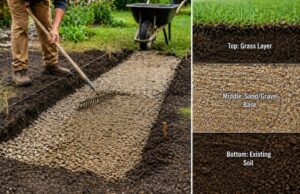
Step-2: Clear the Ground and Build Your Base
Remove whatever is growing in the path zone. Bare soil from existing traffic? Great, Still grassy? Use a flat spade or sod cutter to strip it clean.
Loosen the top few inches of soil once the surface is cleared. Then spread your sand or gravel layer 2 to 4 inches deep and rake it level. This base layer is non-negotiable. It is what separates a path that lasts from one that turns soggy and dies in the first wet season.
Step-3: Lay Your Sod
Place sod rolls tight against each other with no gaps between them. Press each piece down firm so the roots are making actual contact with the soil below. Walk along the sod and press it down with your feet as you go.
Water every single day for the first two weeks. This is the root establishment window and it is when the whole project either succeeds or fails. Keep foot traffic off the path during this time. Two weeks of patience saves you from starting over.
Step-4: Add Stepping Stones if Needed
If kids are going to be running back and forth on this path multiple times a day, stones are worth adding. Space flat flagstone or concrete pavers about 18 to 24 inches apart. That is a natural stride length for most adults and kids.
Set each stone level with or just slightly above the surrounding turf. Your mower needs to pass over them without catching. Get this wrong and you will be fighting your mower every single week.
Step-5: Edge It Clean
Cut a crisp border along both sides with a half-moon edger or flat spade. Clean edges are what make the path look intentional instead of accidental.
Grass paths feel natural and pleasant underfoot while also doing a great job of separating different areas of your yard. Adding low-growing plants like creeping thyme right along the edge softens the border and adds a little fragrance every time someone walks past. [gardeningknowhow]
How Do You Keep the Path Looking Good All Season?
Build it right and maintenance is genuinely minimal. But there are a few things you cannot skip.
Mow Regularly but Never Too Short
During spring and summer your path needs cutting about once a week. In winter you can drop that down to every 20 to 30 days depending on growth rate. [gogreenlands]
Never cut below 2.5 inches. Shorter than that and the roots weaken fast. Thin roots mean thin grass and thin grass cannot handle regular foot traffic. A slightly taller path actually wears better than a scalped one. Most people get this backwards.
Water Deep Not Often
Once those first two weeks are done switch to deep watering one or two times per week. Shallow daily watering keeps roots close to the surface which makes the grass fragile and drought-sensitive. Deep watering pushes roots down and that means a tougher more resilient path through summer.
Fertilize Through the Growing Season
Fertilizing between March and November keeps the grass vigorous enough to handle regular foot traffic and resist weed pressure. Apply every three to four weeks and water it in right after so nutrients actually reach the root zone. [gogreenlands]
A balanced granular fertilizer works fine. If you prefer organic, slow-release compost-based blends work well and are gentler on pollinators and nearby plants.
Fix Bare Spots Before Weeds Find Them
Bare patches happen. They will show up eventually, especially in the areas kids run most. The move is to catch them early.
As soon as you see a thin area loosen the soil with a rake, throw down some matching grass seed, press it in, and keep it moist for 10 days. Deal with it fast and the path fills back in. Wait too long and weeds move in and you have a bigger problem on your hands.
What Style of Grass Path Suits Your Yard?
There is no single right answer here. It depends on how your yard is laid out and what kind of look you are going for.
A simple mown turf path is just a strip of shorter grass cut through a taller or wilder lawn area. No materials needed beyond your mower. Great for large open yards with a natural meadow feel.
Stepping stones set into a grass strip handle heavier traffic well. The stones take the direct wear and the turf fills in around them. This style looks intentional and works well in modern or more structured yard designs.
Alternating paver and grass strips give you strong visual lines with a contemporary look. Works especially well in front yards where curb appeal matters.
A grass strip with a narrow gravel border on each side defines the path clearly and helps with drainage. Good option for drier western climates where you want the look of turf without heavy watering.
What Mistakes Will Cost You Later?
Skipping the base layer. This is the most common one. Without drainage underneath the sod, water pools at the roots and the grass rots out. One wet season and the whole path is gone.
Mowing too short. Scalped grass has shallow roots. Shallow roots cannot handle foot traffic. Keep the mow height at 2.5 inches minimum no matter what.
Ignoring soil pH. Grass wants a pH between 6.0 and 7.0. Outside that range the roots struggle to absorb nutrients even when you are fertilizing on schedule. Test first. Fix the pH if needed. Then lay your sod.
No drainage slope. Your path should slope about a quarter inch per foot away from any structures. Without that slight grade water sits and slowly destroys both the grass and the base layer beneath it.

Is a Grass Pathway Worth the Effort?
For most homeowners yes. Easily.
It is one of the cheapest ways to add real function and visual flow to a yard. It handles regular foot traffic. It keeps rainwater in the ground where it belongs. And it gives your outdoor space a natural connected feel that hard materials just cannot match.
Gardens that work with nature rather than against it save water, support local wildlife, and create outdoor spaces that genuinely age well over time. [gardenalchemist] A grass path does all of that without asking much from you in return.
Pick a dry weekend. Mark your line. Lay your sod, Water it in, Then stay off it for two weeks.
By the time summer hits you will have a barefoot-friendly green walkway that looks like it has always been part of your yard. Okay, Bye Bye